Bioluminescence Night Kayaking in Andaman
Published 14 October 2026
Bioluminescence night kayaking in Andaman is a guided evening paddle where tiny plankton can light up the water in blue-green flashes around your kayak. Learn the best time to go, how moon phase and weather matter, what the 2026 safety rules say, and what it costs.
What Is Bioluminescence Night Kayaking in Andaman?
Bioluminescence night kayaking in Andaman is a guided evening paddle where tiny living plankton can flash blue-green light around your paddle and kayak. Trips run around Swaraj Dweep (Havelock Island) and Port Blair, now officially Sri Vijaya Puram. Moonless nights give you the best shot, but the glow is a natural event, so nobody can promise it.
If you're searching for night kayaking in Havelock Island, an Andaman bioluminescence tour or the best time for bioluminescence in Andaman, this guide brings the season, moon phase, safety rules, price and booking tips together in one place.
Key takeaways
The light comes from living organisms, not a tour effect, so it changes from night to night.
Darker, moonless nights near the new moon usually make faint flashes easier to spot.
Standard trips are currently listed at roughly ₹1,800 to ₹3,500 per person.
Stay flexible. Weather, tides and sea conditions can change the plan at short notice.
What Does a Bioluminescent Night Paddle Actually Feel Like?
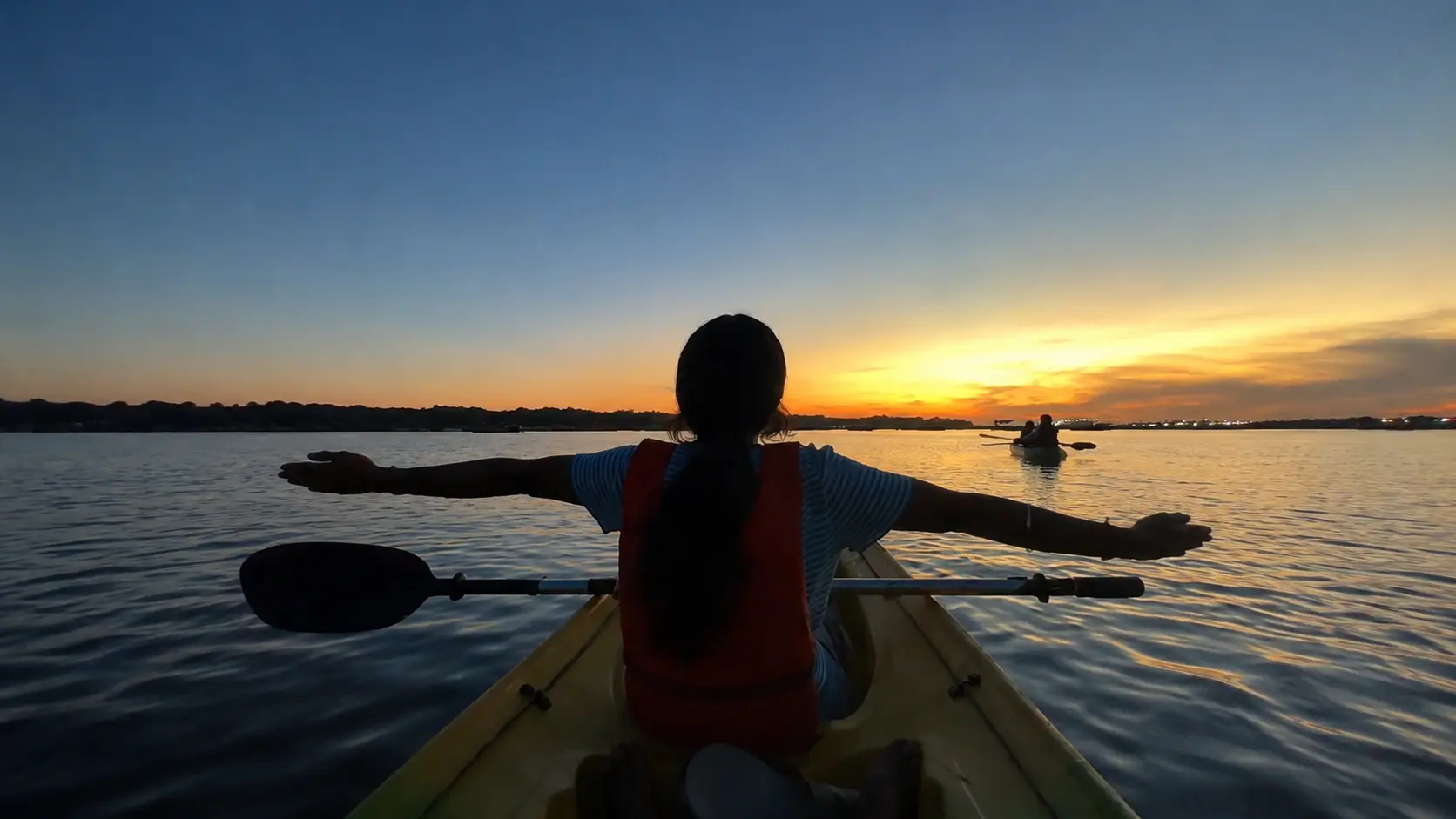
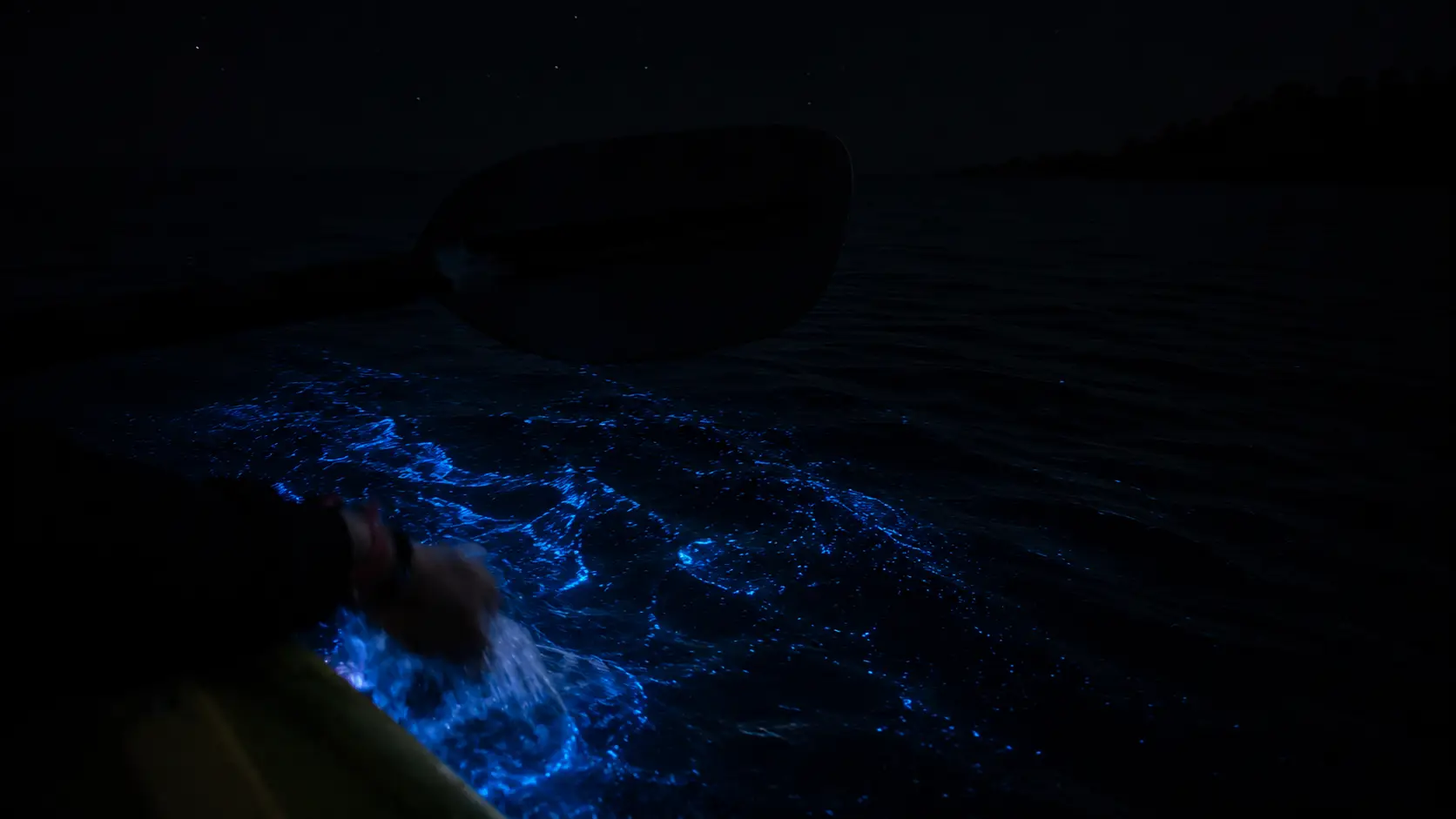
Picture this. The water is dark and calm, the sky is dim, and all you can hear is your paddle dipping in and out. Then a quick blue-green spark appears beside the blade and fades. That's the moment people come for, and on a good night it's quietly magical.
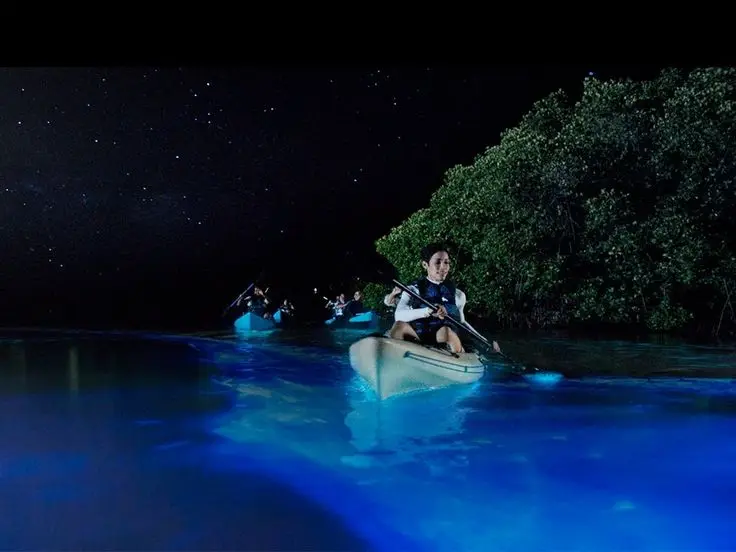
Not every night is a good night, and that's okay. On a faint night you might see only a few scattered flashes. On a stronger night, every stroke can leave a short, shimmering trail. Either way, you're sitting right at water level, listening to night birds, soft waves and your guide's calm voice.
One more thing: photos rarely do it justice. Phone cameras struggle in the dark, so what you see with your own eyes is usually better than anything you'll capture. Think of the glow as a bonus on top of a peaceful night on the sea, and you'll rarely feel let down.
What Makes the Water Glow? The Science in Plain Words
Bioluminescence simply means a living organism making its own light through a chemical reaction. In coastal waters, the glow you see from a kayak often comes from single-celled plankton such as dinoflagellates. The light is usually blue or blue-green.
The trigger is movement. A paddle blade, a small wave or a passing fish stirs the water, and the plankton answers with a brief flash. That's why the light shows up right where you move and disappears a moment later. It's also why a tour can't "switch it on". The plankton have to be there, active and close to the surface.
We can't say exactly which organisms are lighting up on a particular night in Andaman, because that depends on the season and the water conditions. What we can say is what this means for you:
Bright lights work against you. A torch or phone flash dazzles your eyes and hides the faint glow. Switch lights on only when your guide says it's safe.
Nobody can guarantee a glow. Any operator who promises you glowing water is overselling.
Where to Do Night Kayaking in Andaman
Night Kayaking in Havelock Island (Swaraj Dweep)
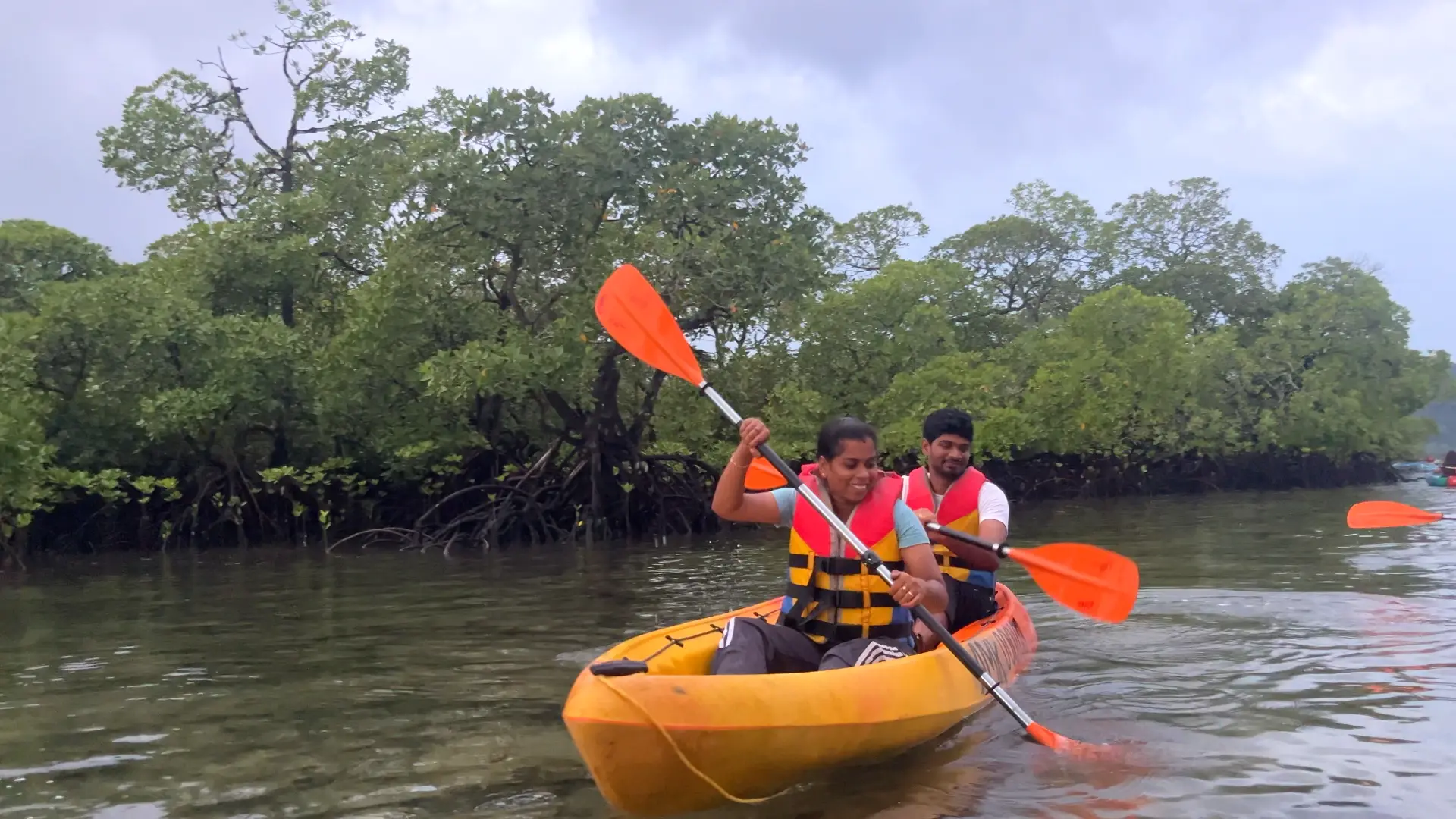
Swaraj Dweep, the official name for Havelock Island, is the best-known base for Swaraj Dweep night kayaking and Andaman kayaking in general. Public listings describe routes through sheltered water and mangrove-lined stretches, usually starting near the jetty area. Mangrove channels are dark and sheltered from wind, which helps when you're watching for faint flashes.
Launch points and routes do change, so don't rely on an old blog post or a past visitor's review. Ask your operator for the exact meeting point and route on your travel date.
Port Blair (Sri Vijaya Puram) and Neil Island
Port Blair is another common launch area, and some operators run trips there on arrival or departure days. Neil Island, officially Shaheed Dweep, is better known for calm daytime paddling, and only a few operators offer night trips there.
So which should you pick? If your schedule is tight, a Port Blair trip is easier to squeeze in. If you're staying longer, Swaraj Dweep gives you more room to reschedule if the weather turns.
Best Time for Bioluminescence in Andaman: Season and Moon Phase
Here's the honest truth about the best season: the advice online doesn't agree. Some operators say November to May. Others narrow it to November to February. A few travel articles even point to the monsoon months. No month guarantees a glow, so it's smarter to plan around conditions you can actually control.
Choose the season for calm, safe water. The cooler, drier months usually bring calmer seas and fewer cancellations, and most operators run their regular programme then. Rough monsoon seas make cancellations more likely.
Aim for the new moon window. Moonlight washes out faint flashes. New moon night kayaking in Andaman gives you the darkest skies, so try to book within the few nights around it.
Keep an eye on the weather. Heavy clouds can make the sky darker, which helps, but rain, wind and swell can cancel the trip altogether.
Leave a spare night. If your first evening is called off, a second attempt keeps the plan alive.
Check a moon-phase calendar before you book. Then ask your operator how they judge visibility. A good one will talk about moon phase, weather, tides and recent sightings, and will never promise you a glow.
How the Evening Usually Runs: A Typical Timeline
Every operator runs things a little differently, but most trips follow a similar rhythm:
Meeting and check-in. You arrive at the agreed spot, confirm your group and sign any forms.
Safety briefing. Guides explain how to board, paddle, stop, turn and signal for help.
Equipment fitting. You get a properly fitted life jacket, a paddle and a single or double kayak.
Short paddling lesson. Beginners usually get a quick practice session on the shore.
Guided paddle. The group moves together along the planned route, pausing now and then so your eyes can adjust to the dark.
Return and debrief. Everyone heads back together, and the guides count heads before you leave.
Public listings put the whole experience at about two to three hours including training. Confirm the exact timing with your operator.
Is Night Kayaking Safe in Andaman? Safety and the 2026 SOP
Let's be straight about it. Night paddling carries risks that daytime trips don't: darkness, reduced depth perception, the chance of panic and changing sea conditions. The official SOP itself acknowledges these risks. That's why the operator you choose matters even more than the date you pick.
What a Responsible Operator Should Provide
Ask for these before you pay:
Trained, experienced guides who know the route at night
Fitted life jackets for every guest
Communication equipment and a clear plan for getting back to shore
A stated maximum group size and guide-to-guest ratio
A written weather and cancellation policy
Registration or licence details that match the official requirements
How to Look After Yourself on the Water
Be honest about your swimming ability and how comfortable you are in low light.
Stay where your guide can see you, and keep a safe gap from other kayaks.
Follow every instruction on when to paddle, stop, turn and head back.
If conditions get worse, accept a route change or cancellation without a fuss.
Tell the operator in advance about any medical condition, back problem or breathing issue.
Age and health limits vary between operators. Some listings set a minimum age of seven, while others say five, so always confirm directly. And if you have a health concern, check with your doctor before booking.
How to Choose the Right Night Kayaking Operator
Brochures and prices can look almost identical online. This checklist helps you tell a careful operator from a risky one.
1. Honest expectations. Pick operators who say plainly that the glow is natural and unpredictable. Be wary of "100% guaranteed" claims.
2. Clear logistics. You should get the meeting point, transfer details, duration and route type in writing before you pay.
3. A weather and no-glow policy. Ask what happens if the trip is cancelled for sea conditions, and what happens if the water simply stays dark. Some operators refund or reschedule for cancellations but not for a faint glow. Know the rules before you book.
4. Real safety habits. Look for proper briefings, fitted gear, small groups and guides who keep counting heads.
5. Light discipline. Some pages casually tell guests to bring a torch. Good practice is the opposite. Keep lights off unless your guide says otherwise, so everyone's eyes can adjust and the glow stays visible.
6. Respect for the place. Ask how the company handles group size, waste and wildlife encounters.
7. Details you can verify. A trustworthy page shows who wrote it, who reviewed it, when it was updated and where its facts come from.
How Much Does Night Kayaking Cost in Andaman?
Night kayaking Andaman price depends on the operator, the route and what's included. On public pages checked in October 2026, standard bioluminescence night kayaking was listed from about ₹3,500 to ₹4,000 per person. Some premium or private options cost more, and package add-ons may carry GST on top.
Don't judge by the headline number alone. A cheaper trip that skips transfers, group limits or proper safety gear isn't really a saving.
Before you pay, ask three simple questions. What's included? Are taxes extra? What do I get back if the trip is cancelled because of weather? Get the answers in writing.
What to Wear and Bring
Quick-dry clothes you're happy to get wet
Footwear suited to wet entry, if your operator recommends it
A small waterproof pouch for your phone and essentials
Insect repellent for the mangrove edges
A towel and a dry change of clothes for afterwards
As few valuables as possible, and no jewellery
Skip the bright torch and phone flash on the water unless your guide allows it. If you need some light, ask whether the operator supplies dim or red-filtered lights.
Protecting the Night Sea and Its Wildlife
You're a guest in a sensitive habitat, so small habits make a real difference:
Keep your voice low so the group, and nearby birds, can settle.
Don't scoop up glowing water, touch marine life or step on mangrove roots.
Take all your litter back with you.
Stay on the guided route and don't drift into restricted areas.
Ask how your operator limits group size and manages waste. A company that cares about the water will be happy to answer.
Planning Around the Ferry and the Rest of Your Stay
Ferry timetables can shift because of weather or technical issues, so check sailings separately with the Directorate of Shipping Services. Never assume a late ferry will line up neatly with an evening kayak departure.
A few planning tips:
Book the kayak early in your stay so you have a backup night.
Avoid scheduling it on the same evening as a departure ferry.
Pair it with a daytime mangrove paddle, beach time or snorkelling, and check local conditions before each activity.
Keep one evening free in case the weather moves your trip.
And if the sea stays dark? You'll still have quiet water, a sky full of stars and the sounds of the night. That alone makes it a worthwhile evening.
Frequently Asked Questions About Night Kayaking in Andaman
Does Andaman have bioluminescence?
Yes. Glowing plankton has been reported around Swaraj Dweep and Port Blair, and operators run night kayaking trips there. Sightings vary from night to night, though, and are never guaranteed.
What is the best month for bioluminescence in Havelock?
No single month guarantees a glow. Operators commonly suggest the cooler, calmer months, roughly November to February or May, but the moon phase matters more. Aim for the darkest nights around the new moon.
Can beginners do night kayaking in Andaman?
Night kayaking for beginners in Andaman is common. Many guided trips are designed for first-timers and include a short lesson and life jackets. Confirm age, swimming and health limits with your operator, because rules differ between companies.
Is night kayaking in Andaman safe?
It can be, when it's run by a registered operator that follows the 2026 SOP, with trained guides, fitted life jackets, small groups and a clear return plan. Night paddling still carries some risk, so follow your guide's instructions at all times.
Will I definitely see glowing water in Andaman?
No. Bioluminescence is a natural event, and its strength changes from night to night. Some nights show only a few sparks, and others a bright shimmer.
Should I bring a torch?
Only if your guide allows it. Bright light hides faint flashes and spoils your night vision, so most of the time it's best to leave it off.
How much does night kayaking cost in Andaman?
Listed prices run from about ₹3,500 to ₹4,000 per person for standard trips. Compare inclusions, taxes and the cancellation policy before you pay.
How long does the trip last?
Public listings suggest about two to three hours including training. Confirm the duration and meeting time with your operator.
What happens if bad weather cancels the trip?
Policies differ. Ask in advance whether you'll get a refund or a new date, and get the terms in writing.
Final Thoughts: Go for the Experience, Treat the Glow as the Bonus
Bioluminescence night kayaking in Andaman is one of the most memorable evenings you can spend on Swaraj Dweep, but nature sets the schedule. Choose a registered operator, plan around the new moon, follow the 2026 SOP and keep your expectations realistic. Do that, and you'll get a calm, starlit paddle whether or not the sea lights up.
Ready to plan your night paddle? Contact our team to check the next new-moon dates and reserve your spot.