
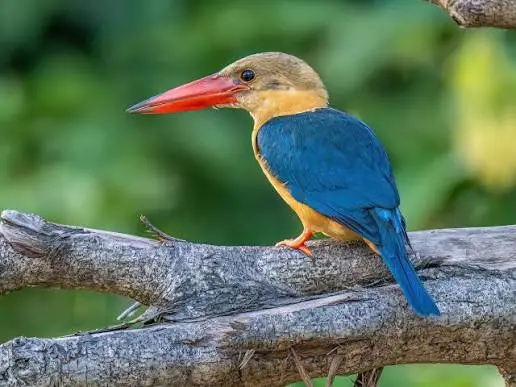
Stork-billed Kingfisher
One of the largest kingfishers in the world, this colourful bird hunts fish in the shallow mangrove channels at dawn and dusk.
Wildlife & Ecosystem
Mangroves are a nursery, not a scenic backdrop. Here is what you can realistically expect to see from a kayak, and what we will not promise.
A mangrove creek is a nursery. Roots break the current, so juvenile fish shelter there, and everything that eats juvenile fish follows. From a kayak you are quiet, low and slow, which is why you see more from one than from a boat.
These are sightings, not guarantees. Wildlife does not keep a schedule, and any operator who tells you otherwise is describing a zoo.
Collared and white throated kingfishers are the ones most people notice: bright, loud, and often perched a few metres off the water. Herons and egrets stalk the shallows at low tide. White bellied sea eagles turn up overhead often enough to be worth watching for. Early morning is materially better for all of them.
Fiddler crabs cover the banks at low tide, the males waving one oversized claw. Mudskippers, fish that spend serious time out of water, skip across the flats. Both are easiest to see on the 7:00 AM trip when the tide is dropping.
Archerfish hunt insects by spitting water at them. Small mangrove snappers and juvenile reef fish shelter in the roots. Occasionally a monitor lizard swims across the channel, which surprises people more than anything else on the trip.
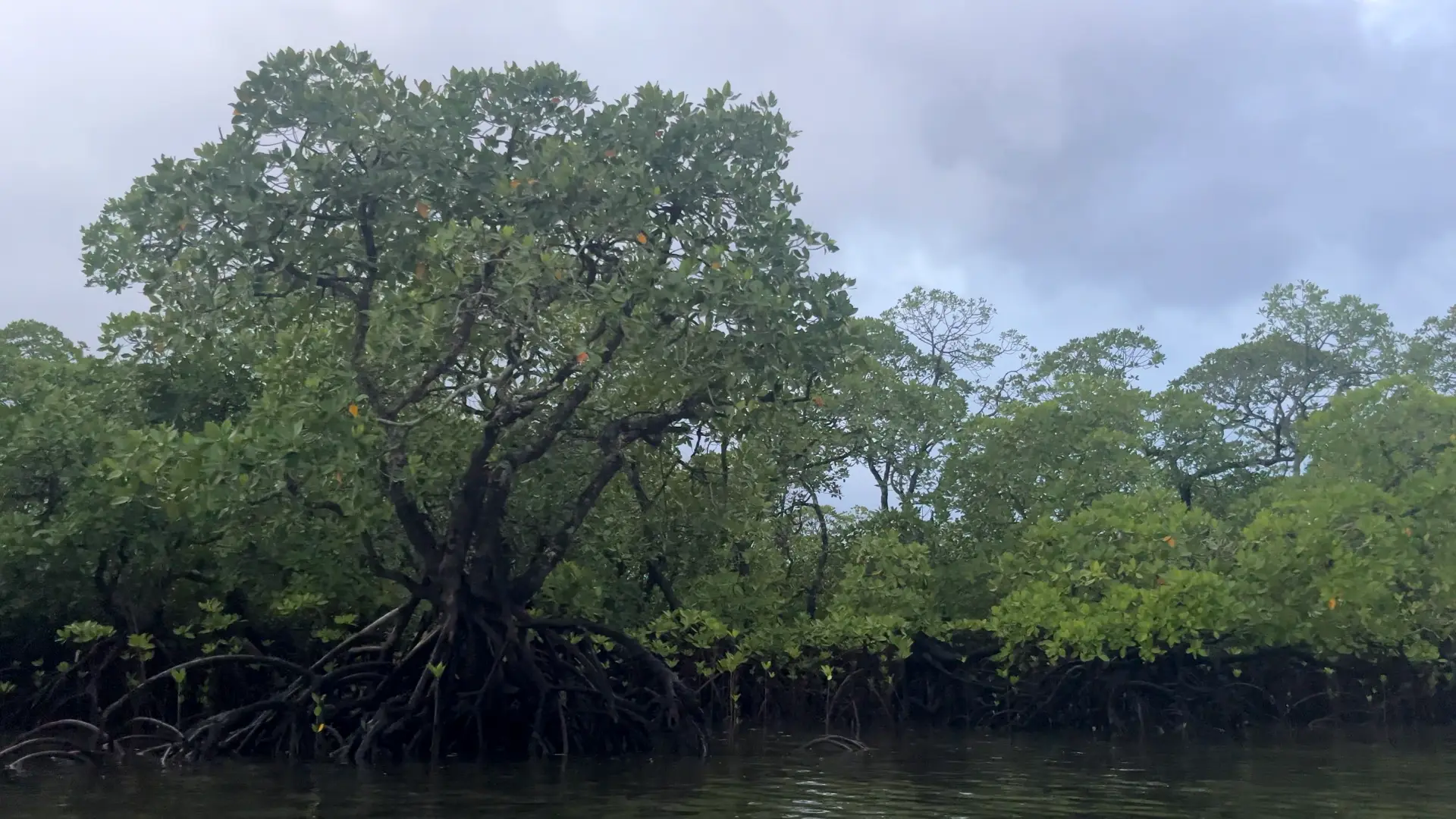
Mangrove roots trap sediment and absorb wave energy, which is why coastlines with intact mangrove take storm surge better than cleared ones. The Andamans learned that expensively in 2004. Paddling through them without an engine, a wake or fuel in the water is the least damaging way to see them, and it is why we cap group sizes rather than run larger boats. You can see it for yourself on the mangrove kayaking trip.
The glow comes from dinoflagellates, single celled plankton that emit light when the water around them is disturbed. Your paddle stroke agitates them and the water lights up in the wake, usually blue green.
It needs genuinely dark water. That means new moon nights, no cloud glow, no torches, and calm conditions. It also needs the plankton to be there in numbers, which varies with water temperature and nutrients, and varies night to night.
We do not guarantee bioluminescence. Some nights it is unmistakable and some nights there is nothing. We run the bioluminescent night trip because a mangrove creek at night is worth paddling regardless, and we would rather you booked it knowing that than felt sold to. What it is and when you can see it goes further.
Discover
The Andaman mangroves are home to an extraordinary array of species. Our expert guides know exactly where to look and when to pause, giving you the best chance to spot rare birds, crustaceans, and the magical bioluminescence that appears after dark.
One of the largest kingfishers in the world, this colourful bird hunts fish in the shallow mangrove channels at dawn and dusk.
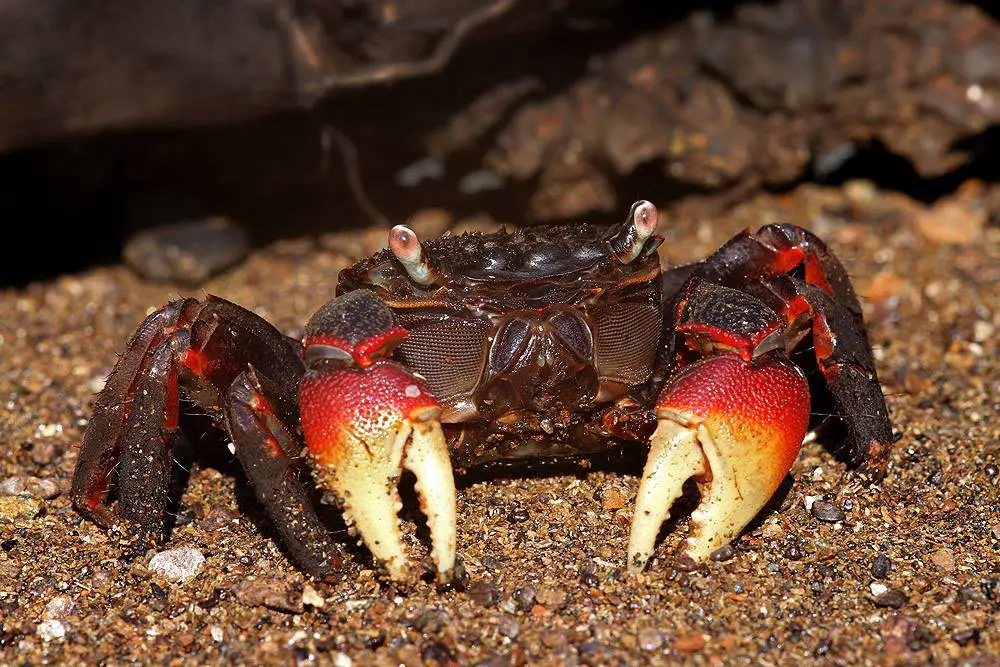
These hardy crabs scuttle across the roots and mud, playing a vital role in keeping the mangrove ecosystem clean and balanced.
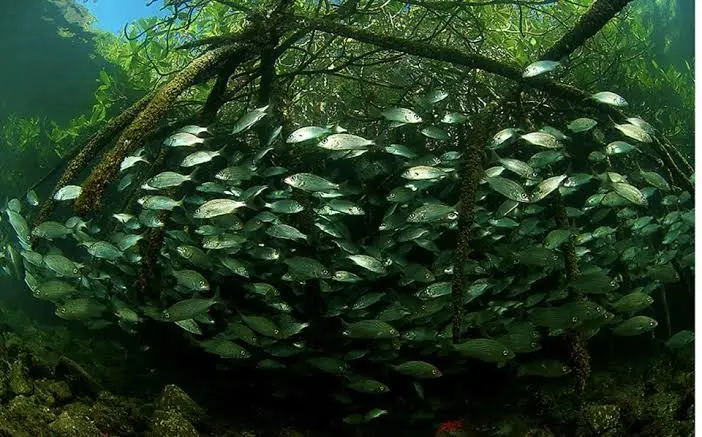
Small reef fish thrive in the sheltered waters between mangrove roots, serving as food for birds and larger marine predators.
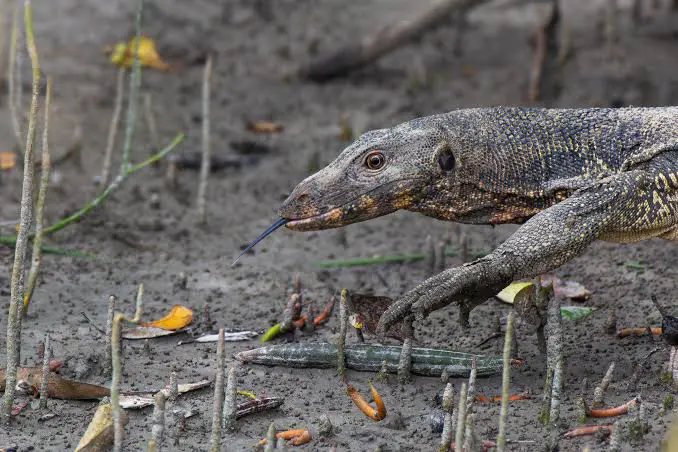
These powerful reptiles are often spotted basking on mangrove branches or swimming silently through the channels.
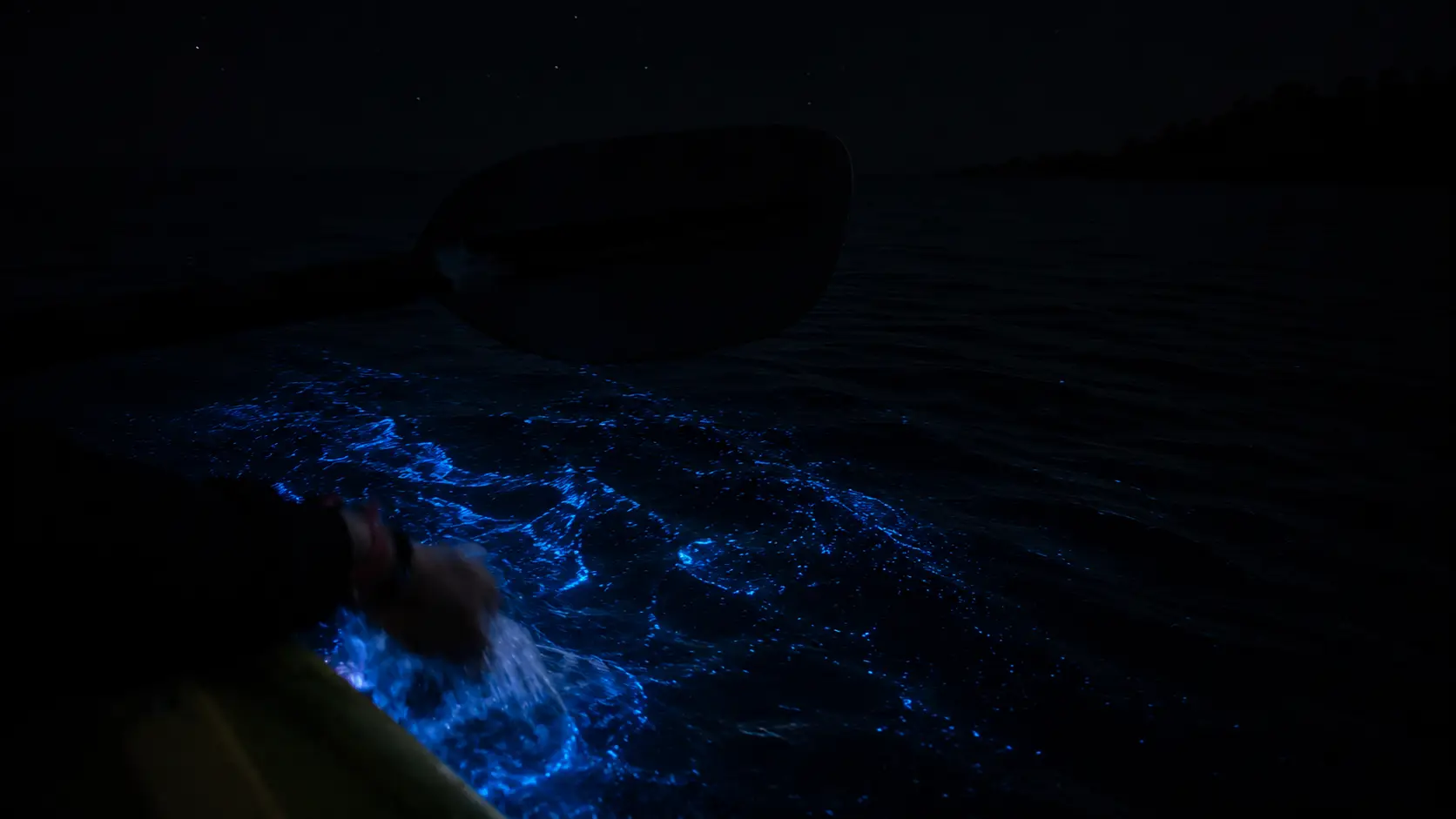
On night kayaks, the water glows electric blue with every paddle stroke, a natural phenomenon that appears when conditions suit.
Ecosystem
Mangrove forests are one of the most productive ecosystems on the planet. Their tangled root systems protect coastlines, filter water, and provide nursery grounds for countless marine species. When you kayak here, you are witnessing nature at its most interconnected.
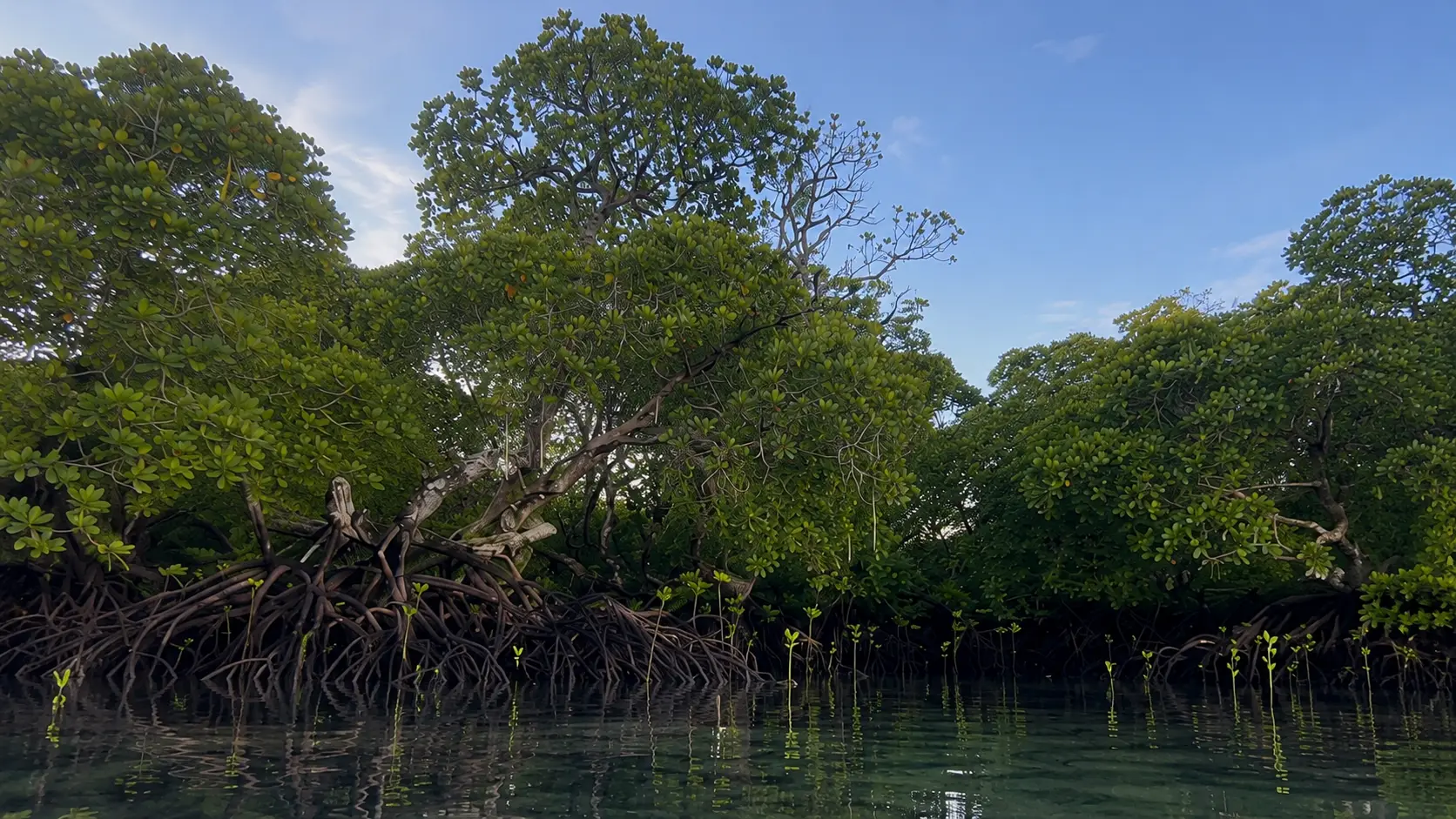
Early morning. The water is calmest and birds such as herons and kingfishers are most active along the creek edges. Late afternoon has warmer light and some activity too. The daytime mangrove trip is 2 hours, which gives you time to drift quietly and let the wildlife show itself.
Commonly seen: stork-billed kingfishers and other kingfishers, herons, mangrove crabs, fiddler crabs and mudskippers on the roots, small fish in the shallows, and water monitor lizards on the branches. Sea eagles are sometimes seen overhead.
We keep the impact as low as we can. Kayaks have no engine, groups are small, and we keep our distance, never feeding, touching or chasing animals. The mangroves are a nursery for young fish, so we paddle through them as visitors, not as a show.
Yes, a phone is fine and we provide a dry bag to keep it safe between shots. A wrist strap is a good idea. Night photos of bioluminescence rarely come out, so on the night paddle we suggest watching rather than filming.
On new moon nights, when the water is darkest and calm. Sightings are reported more often in the warmer, wetter months, but this is a tendency rather than a schedule. Moonlight, cloud glow and torches all reduce what you can see, which is why our night trips run at 7:30 PM in unlit creeks.
It is a night paddle through the mangrove creeks where, on the right night, tiny plankton called dinoflagellates give off a blue-green glow when the water moves, so each paddle stroke can light up. It shows best on dark, calm nights around the new moon, and it is never guaranteed.
No. These are wild animals in their own habitat, so what you see changes from trip to trip. Our guides know where to look and when to stop paddling, which gives you the best chance, but we will not promise a particular sighting.
Mangroves are a nursery: their roots break the current, so young fish can grow in sheltered water before moving out to the reef. The roots also trap sediment and absorb wave energy, which helps protect the coastline during storms.
No, and we will not claim otherwise. Bioluminescence comes from dinoflagellates, plankton that emit light when the water is disturbed, and it depends on darkness, calm water and plankton numbers on that particular night. It shows best around the new moon. Some nights it is unmistakable, some nights there is nothing. Book the trip because a mangrove creek after dark is worth paddling regardless.
Book a guided kayaking trip through the Andaman mangroves.