Common Kayaking Mistakes to Avoid in Havelock
Published 9 October 2026
What are the common kayaking mistakes to avoid in Havelock? This local guide from Andaman Mangrove Kayak covers the 12 most common errors tourists make on Swaraj Dweep, from ignoring the tide and skipping the safety briefing to wearing the wrong clothes and choosing the wrong moon night for bioluminescence, with simple fixes for each one.
Common Kayaking Mistakes to Avoid in Havelock
Every season, we meet travellers who arrive in Havelock excited, with a full camera roll planned and a very tight schedule. Most of them have a wonderful time on the water. But a few of them make small mistakes that turn a magical morning into a tiring, sunburnt or even unsafe one.
The good news is that almost every kayaking mistake in Havelock is easy to avoid once you know about it.
We are Andaman Mangrove Kayak, a local team based in Havelock Island (Swaraj Dweep). We paddle the mangrove creeks, the east coast and the dark bays almost every day, in every season and at every tide. In this guide, we share the most common kayaking mistakes we see, why they happen, and what you should do instead.
What Are the Biggest Kayaking Mistakes in Havelock?
The most common kayaking mistakes in Havelock are ignoring the tide, booking at the wrong time of day, paddling without a local guide, skipping the safety briefing, wearing the wrong clothes, choosing a full moon night for bioluminescence and planning a kayaking trip too close to your ferry. All of these can be avoided by sharing your dates with a local operator, arriving on time and following your guide's instructions.
Why Do Mistakes Happen So Often in Havelock?
Havelock looks easy. The water is calm, the photos on Instagram look relaxed, and everyone seems to be smiling in their kayak. But the island has its own rhythm. Tides rise and fall through the creeks, wind changes through the day, and the moon decides when the sea glows at night.
Most mistakes happen for three simple reasons:
Visitors plan by the clock, but the sea plans by the tide.
Visitors treat kayaking like a quick photo stop, not a nature experience.
Visitors don't know the local conditions, so they trust what looks fine from the shore.
Let's go through the mistakes one by one.
Mistake 1: Ignoring the Tide
How common is it: Very common Who makes it: First-time visitors, self-planners How to fix it: Let your operator choose the time
This is the number one mistake, and it is the one that surprises people most.
What Goes Wrong
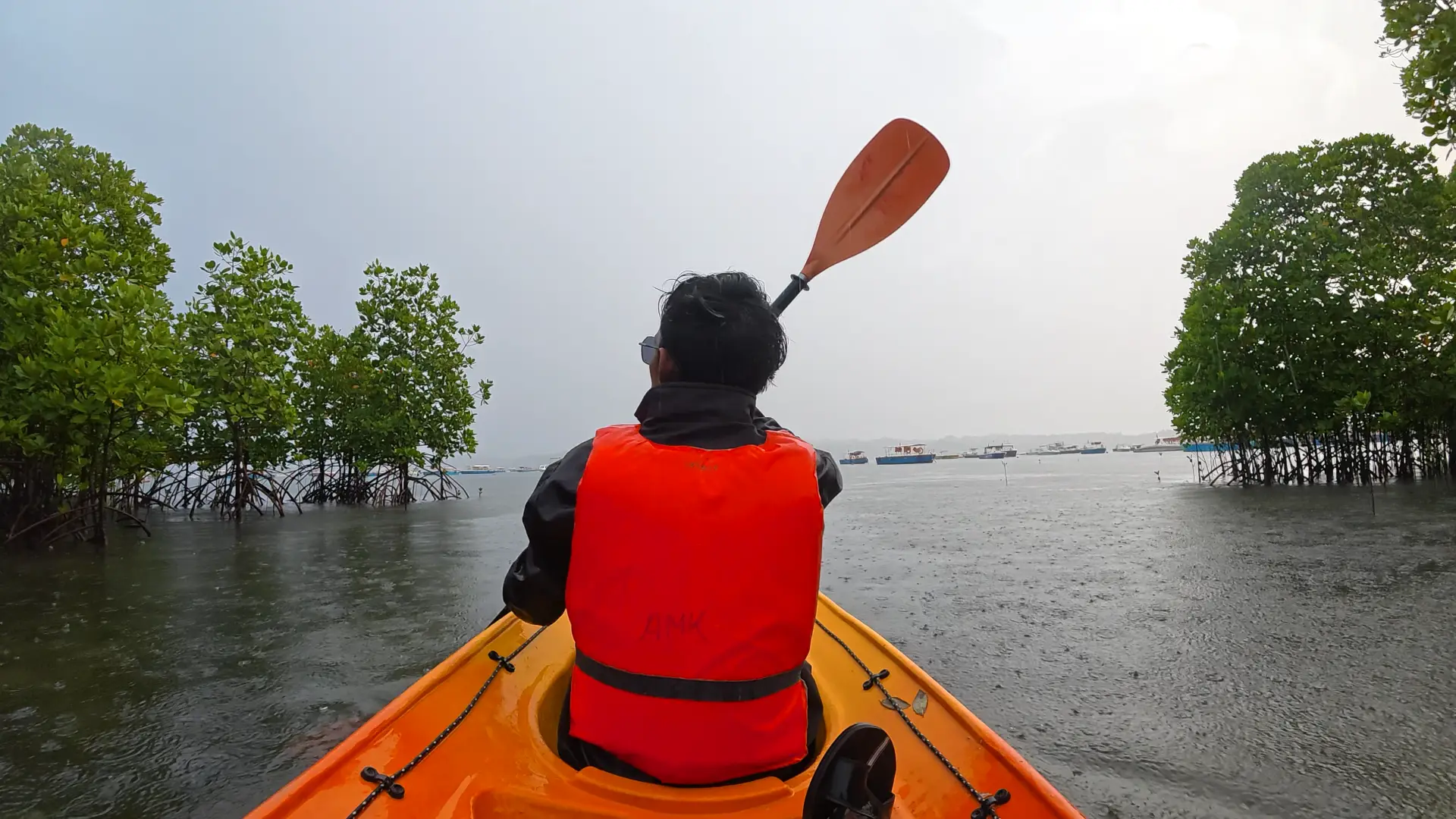
Mangrove creeks fill at high tide and drain at low tide. If you go at the wrong time, the same channel that was open yesterday can be too shallow to paddle today. You may have to turn back early or miss the best green tunnels completely.
What a Typical Conversation Sounds Like
Tourist: Bhaiya, kal subah 6 baje ka slot mil jayega? Hamari flight 11 baje hai Port Blair se. Guide: Sir, kal 6 baje paani bahut kam hoga. Mangrove andar tak nahi ja payenge. 8:30 baje ka time better rahega. Tourist: Arre, par hum toh early uthke ready ho jayenge! Guide: Uthne ki baat nahi hai sir, samundar ka time alag chalta hai. Tide ke hisaab se chalte hain.
What to Do Instead
Share your Havelock dates with your operator first. Let them check the tide chart and suggest the best start time. A slot at 7:00 am may be perfect on one day and useless on another. Be flexible by an hour or two, and you will see much more.
Mistake 2: Booking Everything at the Last Minute
How common is it: Common in peak season Who makes it: Weekend travellers, groups How to fix it: Contact your operator as soon as your ferry is confirmed
What Goes Wrong
In peak months, small-group kayaking slots fill quickly. Operators keep groups small so that every guest gets proper attention. If you ask on the same evening, the best tide window may already be taken.
What a Typical Conversation Sounds Like
Tourist: Hello, aaj shaam ko kayaking ho jayegi kya? Hum 8 log hain. Operator: Sir, aaj toh slot full hai. Kal subah ka dekh sakte hain, par tide thoda late hai. Tourist: Yaar, pehle bol dete toh achha hota. Hamara kal ka plan hi bigad jayega.
What to Do Instead
Message your operator on WhatsApp the day your ferry or flight is booked. Share your dates, group size and the ages of children. This gives the team enough time to match your trip to the best tide, moon and weather.
Mistake 3: Going Without a Local Guide
How common is it: Common among confident paddlers Who makes it: Experienced kayakers, adventure seekers How to fix it: Always go with a trained local guide
What Goes Wrong
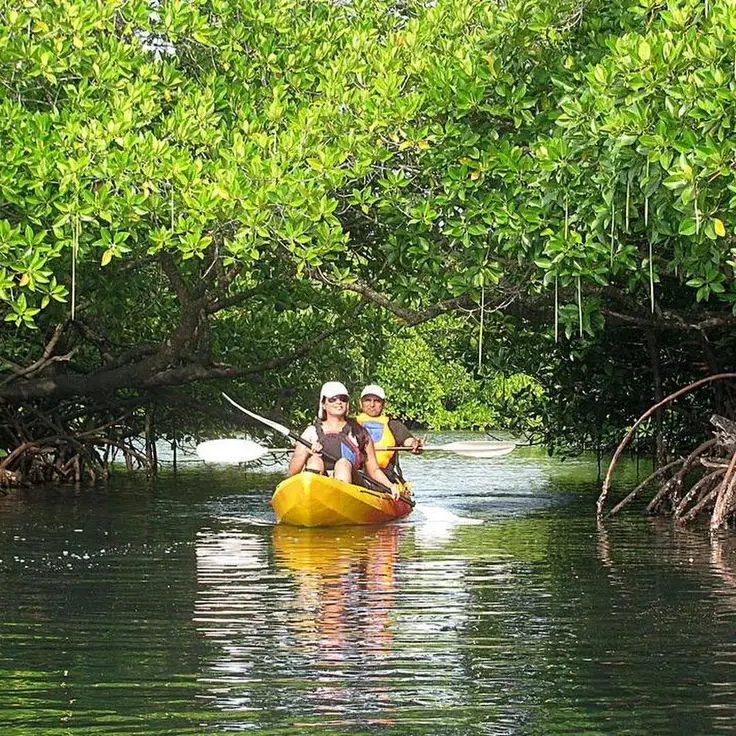
The creeks twist and split in many directions, and every channel looks almost the same. It is easy to take a wrong turn. As the tide goes down, a wrong turn can leave you stuck on mud. Some parts of the Andaman Islands also have saltwater crocodiles, and local knowledge about where and when to avoid certain areas is important.
What a Typical Conversation Sounds Like
Tourist: Humne pehle Goa aur Kerala mein kayaking ki hai. Hum akele kar lenge, guide ki kya zaroorat? Guide: Sir, Goa ka backwater alag hai. Yahan mangrove andar se maze jaisa hai, aur tide bhi tezi se badalta hai. Guide saath rahega toh aap tension-free enjoy kar payenge.
What to Do Instead
Experience helps, but local knowledge matters more. A guide knows the safe routes, the wildlife areas and how the water will change during your trip. You will also see more, because guides spot kingfishers, mudskippers and crabs that most visitors paddle right past.
Mistake 4: Skipping the Safety Briefing
How common is it: Very common Who makes it: Excited groups, people taking selfies How to fix it: Listen to the first five minutes carefully
What Goes Wrong
Everyone wants to get into the kayak quickly. The briefing feels like a delay. But those five minutes explain how to hold the paddle, how to turn, how to stay with the group and what to do if you feel uncomfortable.
What a Typical Conversation Sounds Like
Guide: Sab log yahan aa jaiye, pehle paddle ka briefing le lete hain. Tourist: Bhaiya, hum kar lenge, bas kayak de do. Sunrise nikal jayega. Guide: Sir, sunrise ke liye hi toh briefing zaroori hai. Do minute lagenge, phir aaram se aage badhenge.
What to Do Instead
Stand with the group, put your phone away and listen. Ask questions if something is unclear. A good guide will also tell you where to stay, how far to go and what signals to follow on the water.
Mistake 5: Not Wearing or Adjusting the Life Jacket Properly
How common is it: Common, especially with children and teenagers Who makes it: People who feel they are good swimmers How to fix it: Wear it snugly and keep it on from start to finish
What Goes Wrong
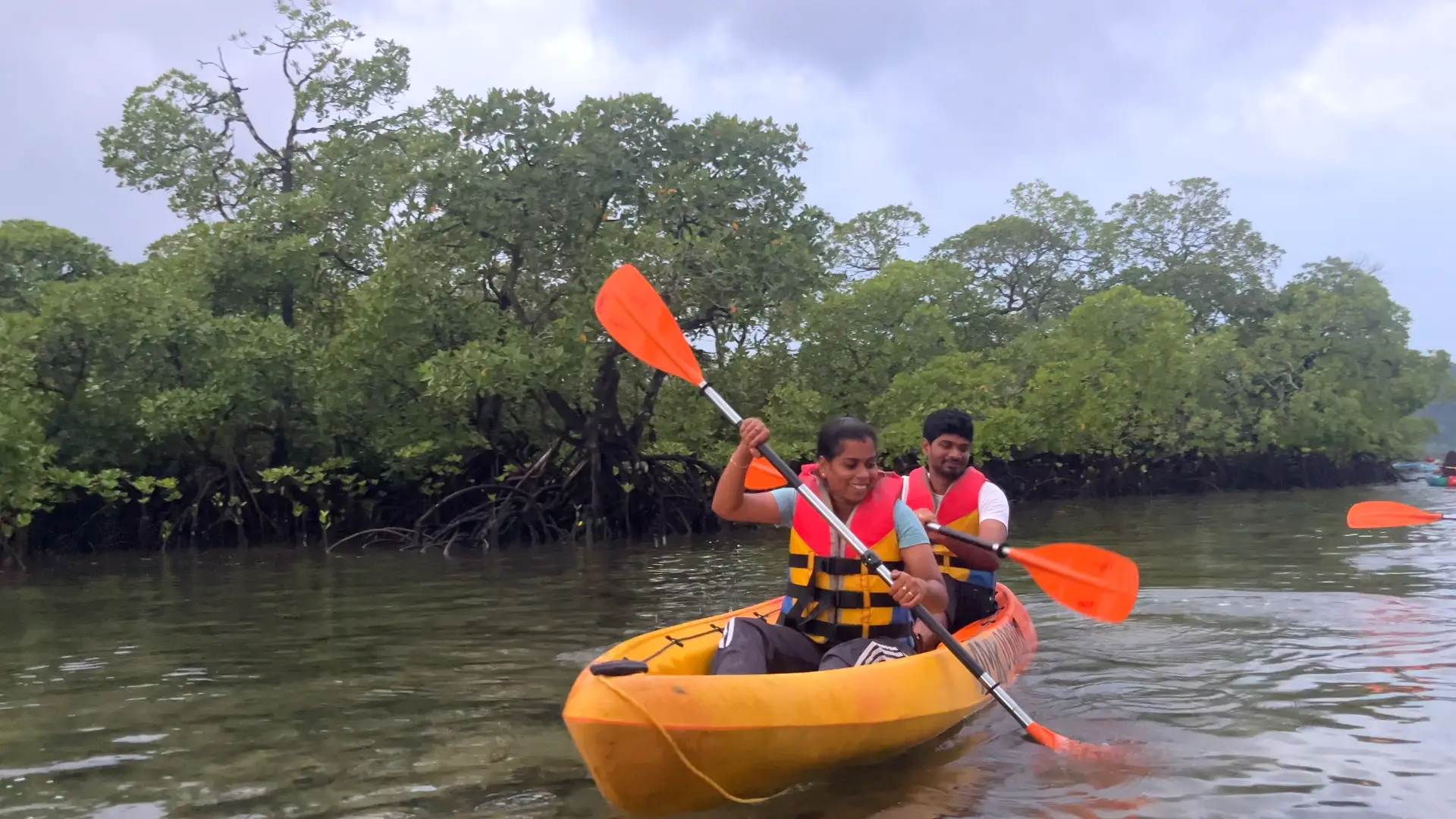
Some people leave the straps loose because the jacket feels hot. Some remove it for a photo. Some believe they don't need one because they can swim. Water conditions, a tired arm or an unexpected tip can change things quickly, even for strong swimmers.
What a Typical Conversation Sounds Like
Uncle: Beta, yeh jacket bahut garam lag raha hai, utaar dun? Guide: Uncle ji, bilkul nahi. Yeh belt thoda tight kar lete hain, phir comfortable lagega. Poori trip mein pehne rakhna hai. Uncle: Theek hai, theek hai. Safety first.
What to Do Instead
Ask your guide to check the fit before you start. A properly fitted life jacket should feel snug, not tight. Keep it on until you are back on land.
Mistake 6: Wearing the Wrong Clothes
How common is it: Very common Who makes it: Almost everyone at least once How to fix it: Dress for water, sun and mud
What Goes Wrong
We see jeans, heavy cotton kurtas, new white sneakers and expensive sunglasses without a strap. Wet jeans become heavy and uncomfortable. Cotton stays damp for hours. New shoes can get ruined in muddy launch points, and sunglasses are easy to lose in the water.
What a Typical Conversation Sounds Like
Tourist: Didi, kya pehen ke aana hai? Humne naye white sneakers liye hain. Operator: Sneakers rehne dijiye, ma'am. Quick-dry shorts ya track pants, light t-shirt aur sandals ya floaters best rahenge. Cap aur sunglasses ke saath strap zaroor lagaiye.
What to Do Instead
Quick-dry shorts or light track pants
A light, breathable t-shirt
Floaters or strapped sandals that can get wet
A cap or hat and sunglasses with a strap
A change of dry clothes for after the trip
A small towel
Mistake 7: Forgetting Sun Protection
How common is it: Very common, even on cloudy days Who makes it: Everyone who thinks "aaj toh badal hain" How to fix it: Apply sunscreen before you leave and carry a cap
What Goes Wrong
The Andaman sun is strong, and water reflects it back at you. Even on a cloudy morning, your face, neck, hands and the tops of your feet can burn. A red, painful back on day two can ruin the rest of your trip.
What a Typical Conversation Sounds Like
Tourist: Aaj toh badal hain, sunscreen ki kya zaroorat hai? Guide: Sir, yahan badal ho ya na ho, dhoop tez hi lagti hai. Paani se bhi reflect hota hai. Thoda laga lijiye, baad mein jalan nahi hogi.
What to Do Instead
Apply a water-resistant sunscreen on your face, ears, neck, arms and feet before you start. Carry a cap and drink water before and after the trip. Be careful to use sunscreen that is reef-friendly where possible, and avoid applying heavy lotion right before getting in the water.
Mistake 8: Carrying Too Much (Or the Wrong Things)
How common is it: Common Who makes it: Photographers, families, first-timers How to fix it: Carry only what you need, in a waterproof pouch
What Goes Wrong
People bring wallets, big cameras, power banks, full-size water bottles and sometimes a handbag. Anything that falls in the water is hard to recover, and a phone without a waterproof cover can be damaged by splashes alone.
What a Typical Conversation Sounds Like
Tourist: Bhaiya, mera DSLR aur teen phone saath le jaun? Guide: Sir, ek phone waterproof pouch mein le jaiye. Baaki sab hamare locker mein rakh dijiye. Photos ke liye hum bhi help kar denge.
What to Do Instead
Leave your wallet, extra phones and heavy bags in a safe place. Carry one phone in a waterproof pouch with a strap. Ask your guide whether they can click a few photos for you. Many operators can help with this, and you will be able to focus on paddling.
Mistake 9: Choosing the Wrong Night for Bioluminescence
How common is it: Very common Who makes it: Couples and groups planning around a weekend How to fix it: Check the moon phase before you book
What Goes Wrong
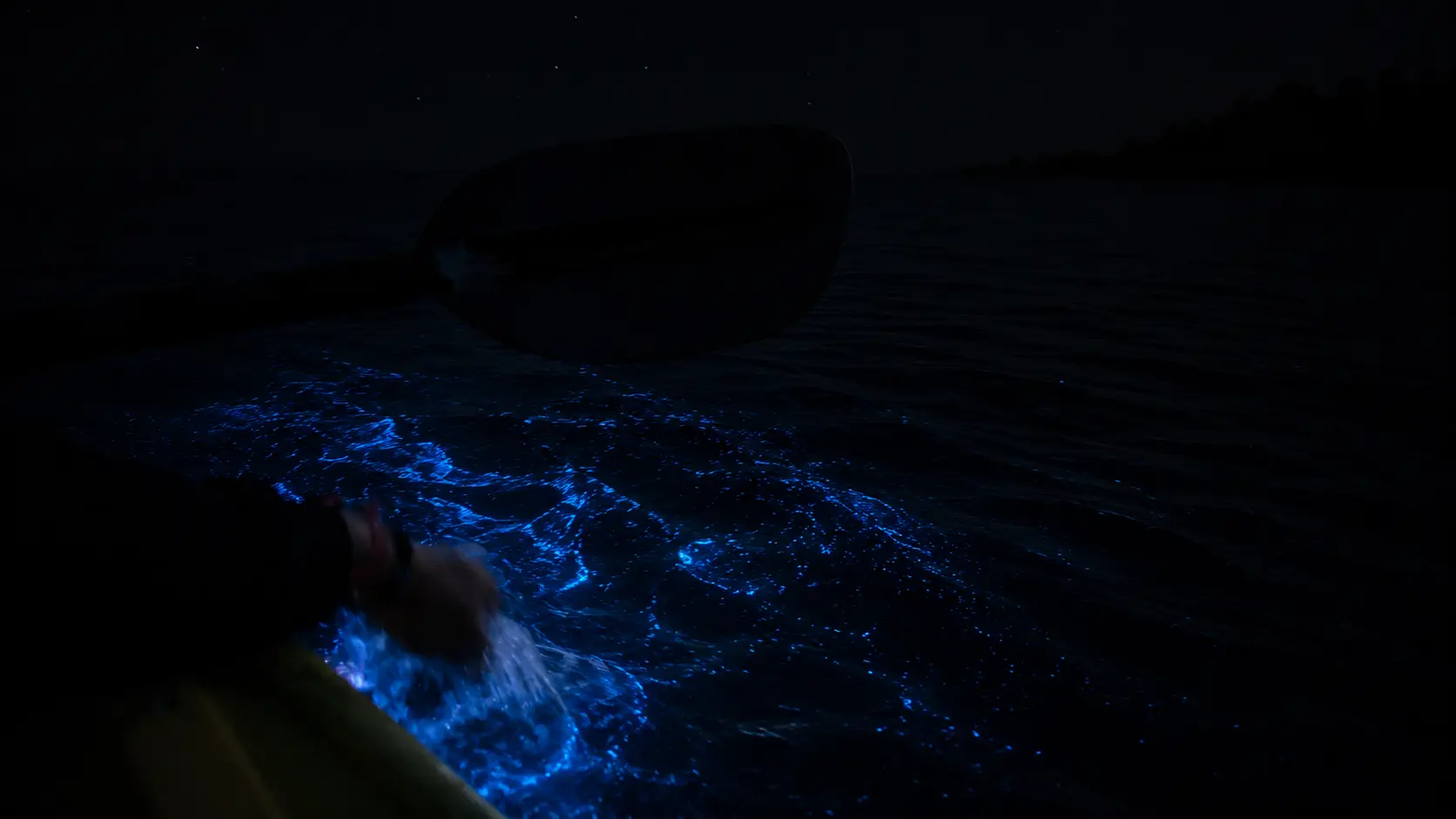
Night kayaking needs darkness. On or near a full moon night, the sky is bright and the glow in the water is very weak. Many visitors book the night only because it fits their schedule, and then feel disappointed.
What a Typical Conversation Sounds Like
Tourist: Bhaiya, hum purnima ke din aa rahe hain. Us raat bioluminescence ka plan karein? Operator: Sir, purnima ki raat chaand bahut tez hota hai, glow kam dikhega. Agar aapka schedule flexible hai toh amavasya ke aas-paas wali raat best hai.
What to Do Instead
If bioluminescence is a priority, plan your Havelock dates around the new moon. If your dates are fixed, ask your operator honestly what to expect. Even then, the glow depends on plankton, water movement and weather, so nobody can promise it every night.
Mistake 10: Using Torches and Phone Flashlights on the Water
How common is it: Common during night kayaking Who makes it: Excited first-timers How to fix it: Keep your phone away and let your eyes adjust
What Goes Wrong
A single bright flashlight can disturb everyone's night vision and reduce the glow in the water. It takes a few minutes for your eyes to adjust to the dark. Once a bright light hits them, you have to start all over again.
What a Typical Conversation Sounds Like
Tourist: Sir, thoda torch on kar lun? Kuch dikh nahi raha. Guide: Ma'am, thodi der ruk jaiye. Aankhein andhere ki aadat daal lengi. Phir paddle chalaiye, paani chamakne lagega. Tourist: Arre wah! Yeh toh sach mein glow kar raha hai!
What to Do Instead
Switch off your phone screen and torch. Wait for five to ten minutes in the dark and let your guide lead the way. You will be surprised how much you can see.
Mistake 11: Standing, Rocking or Overloading the Kayak
How common is it: Common in photo moments Who makes it: Teenagers, friends in a group, selfie lovers How to fix it: Stay seated and balanced
What Goes Wrong
Standing up for a selfie, leaning far to one side to touch a root, or changing seats in the middle of the creek can tip the kayak. It also scares nearby wildlife. Overloading a kayak with extra people or bags makes it unstable.
What a Typical Conversation Sounds Like
Teenager: Bhaiya, khade hoke photo le sakte hain kya? Reel banana hai. Guide: Beta, kayak mein khade nahi hona hai. Baith ke hi photo lo, hum bhi side se click kar denge. Teenager: Okay okay, sit down photo bhi chalega.
What to Do Instead
Stay seated, keep your weight in the centre and move slowly. Ask your guide to stop at a safe spot if you want a proper photo. Follow the weight limit for each kayak.
Mistake 12: Touching, Feeding or Disturbing Nature
How common is it: Common Who makes it: Curious visitors, children How to fix it: Look, enjoy and leave everything as it is
What Goes Wrong
Mangrove roots are home to crabs, small fish and mudskippers. Breaking a branch for a photo, pulling a root, throwing plastic or trying to catch a crab disturbs the whole system. Some coastal and mangrove areas in the Andamans are also protected, and rules can change.
What a Typical Conversation Sounds Like
Child: Papa, yeh kekda pakad lun? Guide: Beta, door se dekhte hain. Yeh unka ghar hai. Hum bas guest hain yahan. Father: Sahi baat hai. Chalo, ek photo le lete hain.
What to Do Instead
Don't touch coral or break mangrove branches. Carry all your plastic back with you. Follow your guide's instructions about where to stop and where not to go. These small habits protect the creeks for the next paddler.
Bonus Mistake: Planning Kayaking Too Close to Your Ferry
How common is it: Quite common Who makes it: Short-trip travellers How to fix it: Keep a buffer of at least a few hours
What Goes Wrong
Weather and tide can shift the trip timing. If your ferry is at 12:00 pm and your kayaking ends at 11:15 am, you will spend your whole paddle watching the clock. You may also miss breakfast and have no time to change.
What a Typical Conversation Sounds Like
Tourist: Humari ferry 12 baje ki hai. 9 baje kayaking shuru karke 11 baje tak khatam ho jayegi na? Operator: Sir, risk hai. Agar tide late ho gaya ya mausam thoda kharab hua toh time kam padega. Behtar hoga ki ek din pehle kar lein.
What to Do Instead
Do your kayaking trip on the day before your departure, or at least keep a buffer of three to four hours before your ferry or flight.
Quick Comparison of Common Kayaking Mistakes in Havelock
Mistake
What Can Go Wrong
What to Do Instead
Ignoring the tide
Shallow creeks, shorter trip
Let the operator choose the time
Last-minute booking
No slot at the best time
Book as soon as your ferry is confirmed
No local guide
Wrong turns, safety risk
Always go with a guide
Skipping the briefing
Confusion on the water
Listen to the first five minutes
Loose life jacket
Unsafe if you fall in
Ask for a fit check
Wrong clothes
Discomfort, damaged items
Quick-dry clothes and strapped footwear
No sun protection
Painful sunburn
Sunscreen, cap, water
Carrying too much
Lost or damaged valuables
One waterproof pouch only
Full moon night
Weak bioluminescence
Plan around the new moon
Torch or flashlight
Poor night vision, less glow
Let your eyes adjust
Standing in the kayak
Risk of tipping
Stay seated
Disturbing nature
Harm to wildlife and mangroves
Look, don't touch
A Simple Checklist Before Your Kayaking Trip
If you want a quick list to screenshot and save, here it is:
Share your dates with your operator early
Be flexible with the start time
Eat a light breakfast and carry drinking water
Wear quick-dry clothes and strapped footwear
Apply sunscreen and carry a cap
Bring a waterproof pouch for your phone
Arrive on time for the safety briefing
Keep your life jacket on from start to end
Carry a change of clothes and a towel
Keep a buffer day before your ferry or flight
Tips From Our Guides: Small Habits That Make a Big Difference
Go early. Most spots in Havelock are calmest, cooler and clearer in the morning.
Be patient with the weather. If your operator suggests shifting your slot, there is usually a good reason. It is about getting the best experience safely.
Tell your guide about any health concerns. If someone in your group has a back problem, a fear of water or is travelling with a small child, mention it at the start. Guides can plan around it.
Carry cash. ATMs are limited in Havelock and mobile networks are weak in some spots, so UPI may not always work near the water.
Keep a free day. Weather can change plans. A buffer day means you won't miss your favourite experience.
Ask questions. Our guides love sharing what they know about mangroves, birds and tides. The more you ask, the more you see.
Why Avoid These Mistakes With Andaman Mangrove Kayak
Our team lives in Havelock and watches this water every day. We have seen the mistakes in this guide many times, and we have learned how to prevent most of them before your trip even begins.
When you book with us:
We check the tide, moon and weather for your exact dates.
We suggest the right timing so you don't land in shallow creeks.
Our local guides give a clear safety briefing before every trip.
Life jackets are fitted and checked before you start.
Small groups keep the experience calm and personal.
We tell you honestly what to expect, including when bioluminescence may be weak.
You don't need to plan the tide chart yourself. Just share your dates and we will guide you on what to wear, when to come and what to carry.
Final Words
Kayaking in Havelock does not need special skills. It needs the right timing, the right clothes and a little respect for the tide, the moon and the mangroves. Avoid the mistakes in this guide, and you will enjoy calm green creeks, golden sunrises and glowing night water the way they are meant to be enjoyed.
The secret is simple: plan with the sea, not against it. Leave the rest to the people who live here.
Share your dates with the Andaman Mangrove Kayak team, and we will plan a safe, smooth and unforgettable day on the water.
See you on the water.