Havelock Kayaking: Guided Tour or Solo Paddle?
Published 8 October 2026
Should you book a guided kayaking tour in Havelock or paddle on your own? This honest guide from the local team at Andaman Mangrove Kayak compares both options on safety, cost, freedom and experience, and helps you choose what fits your trip, your skill level and your comfort on the water.
Havelock Kayaking: Guided Tour or Solo Paddle? An Honest Comparison
When travellers plan kayaking in Havelock, one question comes up again and again. "Do we really need a guide? Can't we just take a kayak and go on our own?"
It is a fair question. Some people love freedom. They don't like fixed timings or groups, and they want to explore at their own pace. Others feel safer with someone who knows the water. Both feelings make sense.
We are Andaman Mangrove Kayak, a local team based in Havelock Island (Swaraj Dweep). Yes, we run guided kayaking trips, so you might expect us to say "always take a guide." But we want to give you an honest picture. In this guide, we explain what each option really looks like in Havelock, the real risks, the real benefits and who should choose what.
Guided Tour or Solo Paddle in Havelock?
For most travellers, a guided kayaking tour is the better choice in Havelock. The mangrove creeks are like a maze, tides change the water depth every few hours, mobile network is weak in many spots and some areas of the Andaman Islands have saltwater crocodiles. A local guide handles all of this, so you can relax and enjoy. Solo paddling suits only experienced kayakers, in calm, open and permitted areas close to the shore, in good weather. If you want freedom without the risk, ask for a private guided tour with just your group.
What Does a Guided Kayaking Tour in Havelock Look Like?
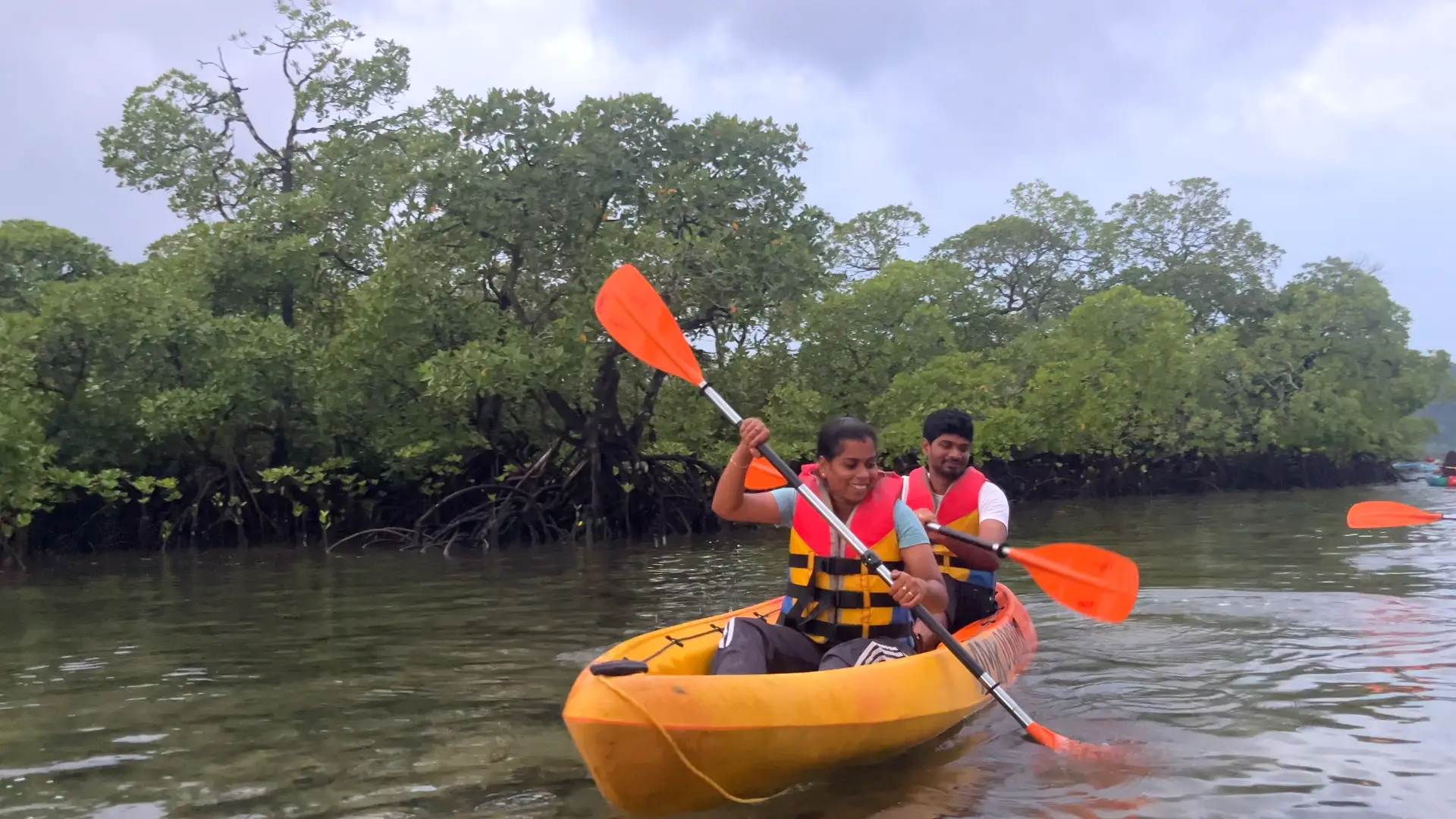
A guided tour means you paddle with a trained local guide who leads the route.
A typical guided trip includes:
A kayak, paddle and life jacket for every guest
A safety briefing and basic paddling practice
A route planned around the day's tide and weather
A guide who paddles with the group from start to end
Stops to explain the mangroves, birds, crabs and sea life
Help with photos and short videos
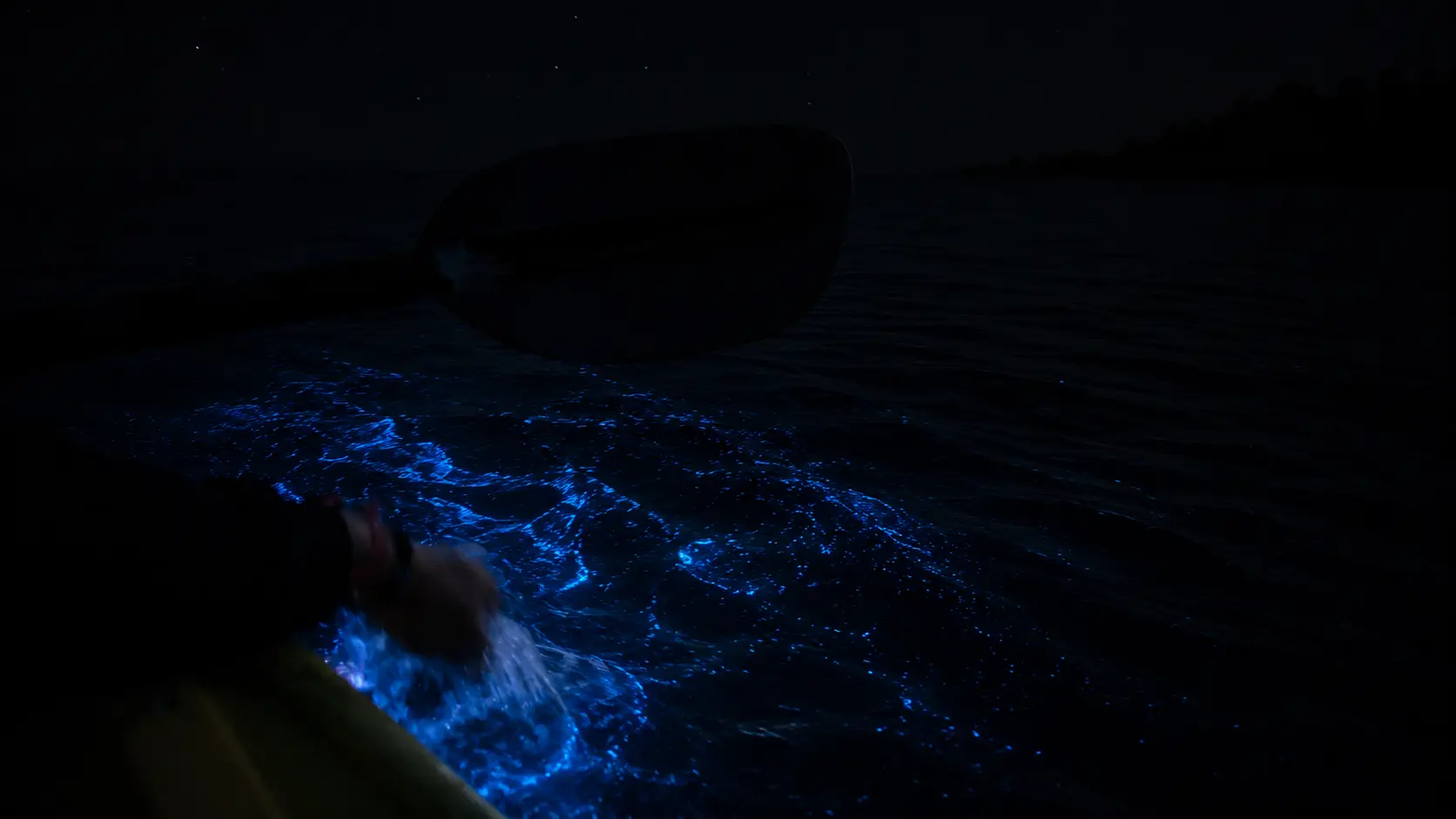
Guided trips come in different styles. Day mangrove tours, sunrise or sunset trips and night bioluminescence kayaking are the most common in Havelock.
What Does Solo Paddling in Havelock Look Like?
Solo paddling means you go out without a guide. In Havelock, this usually happens in one of these ways:
Using a kayak provided by a beach resort for guests, close to the shore
Renting a kayak for a short time from someone on the beach
Bringing your own inflatable or folding kayak
Solo paddling gives freedom, but in Havelock it is usually limited to open water near the beach. The inner mangrove creeks, which are the real highlight of kayaking here, are a different story. We explain why below.
Important: Rules for water activities in the Andaman Islands are set by local authorities, and some coastal and mangrove areas are protected. Rules can also change. If you plan to paddle on your own, always check what is allowed in that area before you go.
Side by Side Comparison
FactorGuided TourSolo PaddleSafetyHigh. Guide, briefing, life jackets, safe routeDepends fully on your skill and judgementMangrove accessYes, deep inside creeks at the right tideRisky and easy to get lostKnowledge of tidesGuide checks tide chartYou need to plan it yourselfWildlife awarenessGuide knows safe and unsafe areasNo local knowledgeLearningPaddling tips and nature storiesSelf learningPhotosGuide helps capture momentsHard to click while paddlingFreedomFollow a route, fixed timingGo anywhere, anytime (within limits)CostHigherLower, if a rental is availableBest forBeginners, families, couples, first visitExperienced kayakers, near-shore fun
The Case for a Guided Tour
1. Safety in Unknown Waters
The sea around Havelock looks calm, especially in the morning. But conditions can change quickly. Wind can pick up, currents can pull you away from the shore and a light drizzle can turn into a strong rain spell.
A local guide reads these signs early. They know when to turn back, which side of the creek to stay on and how to help someone who gets tired or tips over.
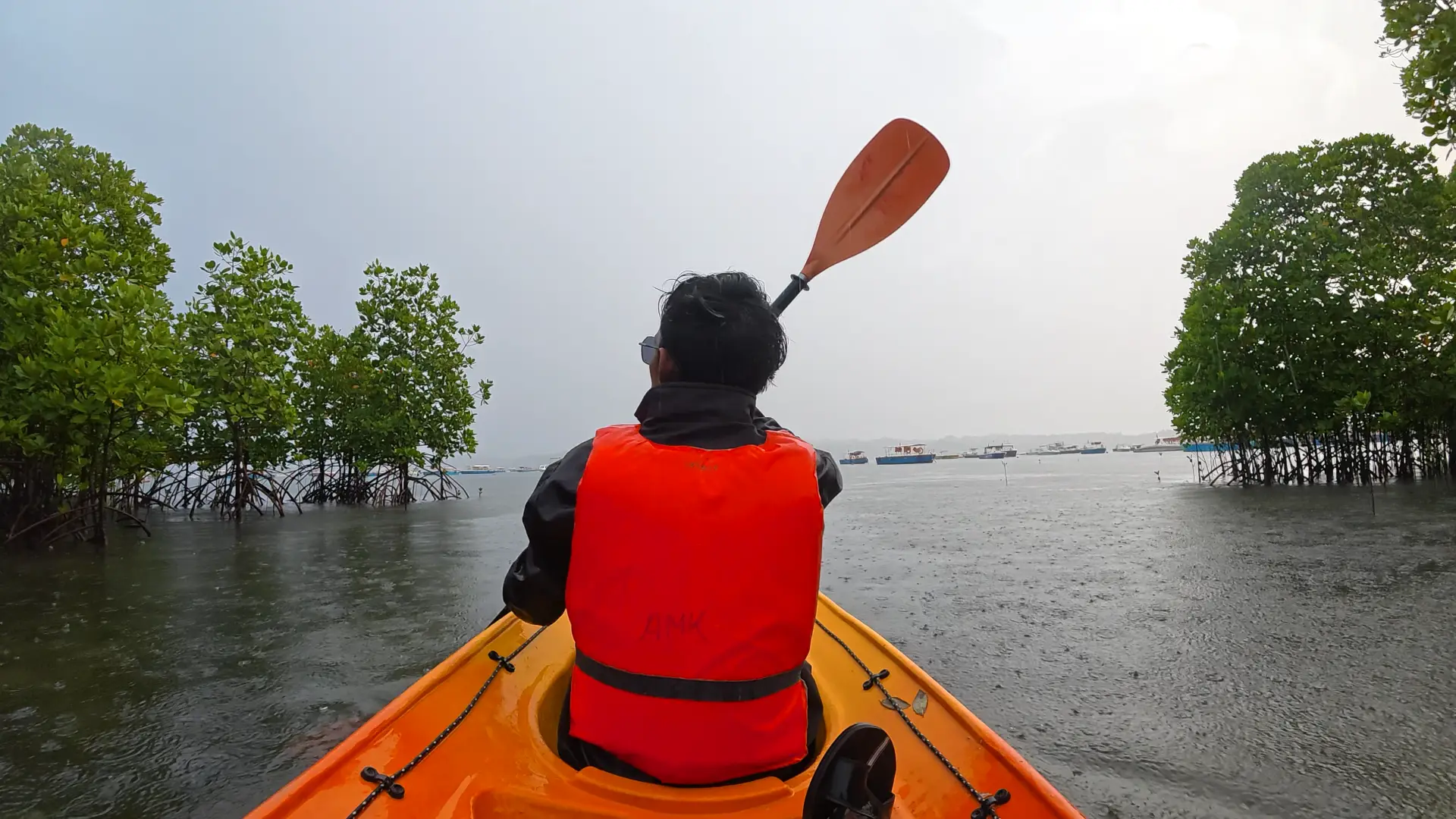
2. The Mangroves Are Like a Maze
Inside the mangroves, every channel looks the same. Green walls of trees, twisting roots, narrow openings. Many channels split, join and end without warning. Without someone who knows the route, it is very easy to lose your sense of direction.
Now add the tide. As water goes down, a channel you came through can become too shallow to paddle back. Getting stuck in the mud in the middle of a mangrove forest is not a fun experience.
Our guides have paddled these creeks hundreds of times. They know which channel leads where and how the tide will change during your trip.
3. Wildlife Awareness
The Andaman Islands are home to saltwater crocodiles in some areas, especially around certain mangrove and creek zones. You may have seen warning boards at some beaches. Encounters are rare, but this is exactly why local knowledge matters. Guides know which areas to avoid and how to stay safe.
Guides also help you respect wildlife. They know where birds nest, where to keep quiet and how not to disturb the creatures living around the roots.
4. Weak Mobile Network
Mobile network in Havelock is patchy in many spots, and inside the mangroves it can disappear completely. If something goes wrong on a solo paddle, calling for help may not be possible. On a guided trip, the guide is your support system on the water.
5. You Actually Learn Something
A kayak trip without a guide is just paddling. With a good guide, it becomes a nature walk on water. You learn how mangroves breathe through their roots, why they matter for the island, how mudskippers survive out of water and which bird is calling from the trees. Guests often tell us this was the part they enjoyed most.
6. Better Timing, Better Experience
Guides plan your trip around the tide, the light and, for night trips, the moon. A solo paddler may go at the wrong time and see only half of what Havelock offers.
7. Photos and Memories
When you are paddling, holding a phone is tricky. Guides help click pictures and videos so you can enjoy the moment and still have memories to take home.
The Case for Solo Paddling
To be fair, solo paddling has real benefits too.
1. Freedom and Flexibility
You choose when to start, how long to stay and where to stop. No group, no fixed route.
2. Lower Cost
If your resort provides kayaks or a short rental is available, it can cost less than a guided trip.
3. Peace and Privacy
Some travellers just want quiet time on the water without anyone else around.
4. Good for Experienced Kayakers
If you have kayaked many times before, know how to handle wind and current and can rescue yourself if you tip over, a short paddle near the shore can be relaxing.
The Limits of Solo Paddling in Havelock
Here's what most solo paddlers don't realise until they are on the water:
The best parts are hard to reach alone. Deep mangrove creeks need tide knowledge and local route knowledge.
Rentals are not easy to find. Kayak rentals in Havelock are limited, and quality and safety gear can vary.
Protected areas have rules. Some mangrove and marine zones have restrictions. Entering them without permission can lead to trouble.
No backup. If you get tired, cramp up, get stuck in mud or face sudden weather, you are on your own.
Night kayaking alone is not safe. Paddling in the dark without a guide, especially near mangroves, is a serious risk. Bioluminescence trips should always be guided.
The Best of Both Worlds: Private Guided Tours
If you like the idea of freedom but want safety too, a private guided tour is a great middle path.
In a private tour:
Only your group paddles with the guide. No strangers.
The pace is set by you. Go slow, stop more, take more photos.
The guide can adjust the route to your interests, like birdwatching or photography.
It feels personal, like exploring with a local friend.
This option works especially well for honeymooners, families with kids, photographers and older guests. Ask your operator if private or couple only tours are available for your dates.
Who Should Choose What?
Choose a guided tour if you are:
Kayaking for the first time or only a few times before
A non swimmer
Travelling with kids or older family members
Planning to explore the mangrove creeks
Interested in night bioluminescence kayaking
On a short trip and want the best experience in limited time
Someone who wants to learn about nature, not just paddle
Solo paddling may suit you if you are:
An experienced kayaker with self rescue skills
Happy to stay close to the shore in open, permitted areas
Paddling in daylight and good weather only
Not planning to enter mangrove creeks
Choose a private guided tour if you are:
A couple or family who wants privacy
A photographer who needs more time at each spot
Someone who wants freedom of pace with full safety
If You Still Want to Paddle Solo: A Safety Checklist
If you decide to paddle on your own, please follow these basics:
Check local rules for the beach or area where you plan to paddle.
Wear a life jacket at all times, even if you swim well.
Stay close to the shore and within sight of people.
Avoid mangrove creeks without a local guide.
Check the weather and tide before you go. Avoid windy afternoons.
Tell someone at your hotel where you are going and when you will be back.
Carry water, sunscreen and a phone in a waterproof pouch.
Never paddle at night alone.
Turn back early. Paddling back against wind or current is always harder than going out.
Don't touch coral or disturb wildlife.
Questions to Ask Before You Book a Guided Tour
Not all guided tours are the same. Before booking, ask:
Does a trained guide paddle with the group, or just give instructions from the shore?
How many guests are in one group?
Are life jackets provided to every guest and in good condition?
How do you decide the timing? Do you check the tide?
For night kayaking, do you consider the moon phase?
Are photos included?
What happens if the weather is bad?
Are private tours available?
A good operator will answer all of these clearly and without hesitation.
Cost: Is a Guided Tour Worth the Extra Money?
A guided tour usually costs more than a simple rental, and it is natural to wonder if it is worth it.
Think about what you get. Safety gear, a planned route, tide and weather checks, a trained guide, access to the mangrove creeks, nature knowledge, photos and peace of mind. For most travellers, kayaking in Havelock is a once in a lifetime experience. Saving a little money and missing the best part of it, or worse, taking a risk, is usually not worth it.
For current rates for your travel dates, message the Andaman Mangrove Kayak team directly.
How Andaman Mangrove Kayak Guides Your Trip
We built our tours for people who want the real Havelock experience without any worry.
Local guides: Our team lives in Havelock and paddles these waters almost every day.
Tide and moon planning: We check the tide chart and moon phase for your dates before suggesting a slot.
Small groups: So everyone gets attention and the trip stays peaceful.
Safety first: Life jackets for all, a proper briefing and a weather check before every trip.
Nature first: We follow simple rules like no plastic, no touching wildlife and no breaking mangrove branches.
Beginner friendly: Most of our guests have never kayaked before, and non swimmers are welcome.
Our goal is simple. You should come back from the water relaxed, amazed and already planning your next trip to the Andamans.
Final Words
So, guided tour or solo paddle? If you are an experienced kayaker looking for a short, easy paddle near the shore in good weather, going solo can work. But if you want to see the real magic of kayaking in Havelock, the green mangrove tunnels, the birds, the glowing water at night, a guided tour is the smarter choice.
You don't have to give up freedom to stay safe. With a small group or a private guided tour, you get both.
Share your Havelock dates with the Andaman Mangrove Kayak team. We will check the tide, the moon and the weather, and plan a kayaking trip that feels just right for you.
See you on the water.