
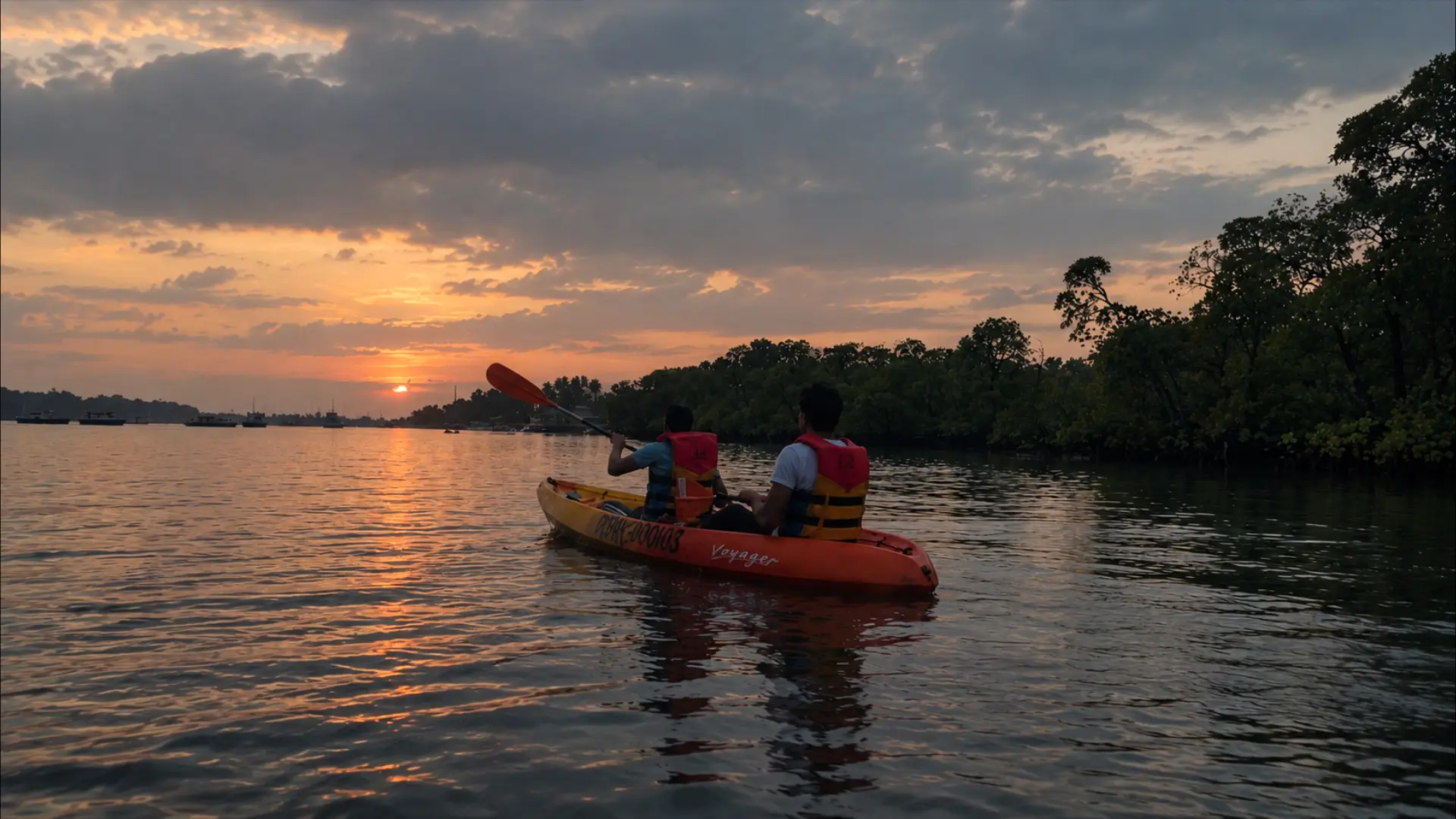
When Is the Best Time to Kayak in Havelock?
Published 15 September 2026
Wondering when to go kayaking in Havelock? This guide from the local team at Andaman Mangrove Kayak explains the best months, the best time of day, how tides and the moon affect your trip, and when to plan night bioluminescence kayaking, so you pick the perfect slot for calm, clear water.
Almost every message we get starts with the same question: "When should we come for kayaking?"
It sounds like a simple question, but the honest answer has four parts. The best month, the best time of day, the right tide and, if you want to see glowing water at night, the right moon phase. Get all four right and you will have calm, clear water and a trip you will remember for years. Get them wrong and you may end up paddling in choppy water, struggling in shallow mud or seeing no glow at night.
We are Andaman Mangrove Kayak, a local team based in Havelock Island (Swaraj Dweep). We plan kayaking slots around the weather, tide and moon every single day. In this guide, we explain all of it in simple words so you can plan with confidence.
When Is the Best Time to Kayak in Havelock?
The best time to kayak in Havelock is from October to May, when the sea is calm and the weather is mostly dry. The best time of day is early morning, when the water is flat and clearest. For mangrove kayaking, plan around high tide so you can paddle deep into the creeks. For night bioluminescence kayaking, choose dark nights close to the new moon. Avoid the monsoon months of June to September, when rain and rough sea often lead to cancellations.
The Four Things That Decide the Best Time
Before we go month by month, here's a simple way to think about it:
FactorWhat It AffectsWhat to Look ForSeason (Month)Weather, sea condition, crowdsOctober to MayTime of DayWater clarity, heat, lightEarly morning or late afternoonTideWater depth in mangrove creeksHigh or rising tideMoon PhaseGlow during night kayakingNew moon and nearby nights
You don't need to be an expert in any of this. A good local operator checks all four for you. But knowing the basics helps you plan your Andaman trip dates better.
Best Season for Kayaking in Havelock
The Andaman Islands have a tropical climate. It stays warm all year, so the real difference between seasons is rain and sea condition, not cold and heat.
Peak Season: October to February
This is the most popular time for kayaking in Havelock, and for good reason.
Weather: Pleasant and comfortable, with cooler mornings compared to the rest of the year.
Sea: Mostly calm, especially from December onwards.
Water clarity: Very good once the monsoon effect is fully gone.
Crowds: High, especially around Diwali, Christmas, New Year and long weekends.
October and November can still get some rain showers as the monsoon slowly leaves. These are usually short, but it is wise to keep a free day in your plan. December to February is the sweet spot for most travellers.
Good to know: Slots fill up fast from mid December to mid January. Book your ferry, hotel and kayaking well in advance.
Summer Season: March to May
Many people avoid summer because of the heat, but for kayaking it is actually one of the best periods.
Weather: Hot and humid, with strong afternoon sun.
Sea: Very calm on most days. This is often when the water looks like glass.
Water clarity: Excellent. Calm sea means the sand settles and you can see deeper.
Crowds: Moderate. April and May bring Indian summer holiday crowds.
The trick in summer is to go early. A sunrise or early morning session feels fresh and cool. By noon, the sun is very strong on the water. Summer nights are also great for bioluminescence kayaking when the moon is right.
Late May is when the monsoon usually starts building, so the weather can change quickly towards the end of the month.
Monsoon Season: June to September
This is the off season for kayaking in Havelock.
Weather: Heavy rain, strong winds and cloudy skies.
Sea: Often rough. Ferries between Port Blair and Havelock can be delayed or cancelled.
Water clarity: Lower, as rain brings mud and the waves stir up the sand.
Crowds: Very low. Hotels are cheaper.
Kayaking may still happen on clear days, especially in calm mangrove creeks, but you can't count on it. If you are visiting in monsoon, keep your plans flexible and don't make kayaking the main reason for the trip.
Month by Month Guide
MonthWeatherSea ConditionKayaking RatingJanuaryPleasant, dryCalmExcellentFebruaryPleasant, dryCalmExcellentMarchWarm, dryVery calmExcellentAprilHot, dryVery calmExcellent (go early)MayHot, pre-monsoon showers later in monthCalm early, changing laterGood (first half)JuneMonsoonRoughPoorJulyMonsoonRoughPoorAugustMonsoonRoughPoorSeptemberMonsoon easingRough to moderatePoor to fairOctoberSome showersImprovingGoodNovemberOccasional showersMostly calmVery goodDecemberPleasant, dryCalmExcellent
Our pick: If you are flexible, December to April gives the best mix of calm sea, clear water and good weather. If you want fewer crowds, February, March and early November are great choices.
Best Time of Day for Kayaking in Havelock
Once you have your month fixed, the next question is what time of day to paddle. Each slot has its own feel.
Sunrise Kayaking
In the Andaman Islands the sun rises early, roughly between 5 am and a little after 6 am depending on the month. That means an early wake up, but it is worth it.
The water is at its calmest.
The light is soft and golden, perfect for photos.
Birds are most active in the mangroves.
The air is cool, even in summer.
Best for: Photographers, couples, nature lovers and anyone visiting in hot months.
Morning Kayaking (After Sunrise to Late Morning)
This is the most common slot for mangrove kayaking.
The water is still calm and the light is bright, so clarity is excellent.
It is easier for families with kids who can't wake up at dawn.
You finish in time for breakfast or a beach visit after.
Best for: Families, first timers and anyone who wants the clearest water.
Midday and Early Afternoon
We generally don't recommend this slot.
The sun is very strong and you can get sunburnt quickly.
Wind usually picks up, making the water choppy.
It is tiring, especially for kids and older guests.
If your schedule allows only midday, cover up well, drink lots of water and choose a shorter route.
Sunset Kayaking
Sunset in the Andaman Islands also comes early, usually somewhere between 5 pm and 6 pm.
The heat drops and the light turns orange and pink.
It is relaxed and romantic.
The water can be slightly less calm than morning, but usually still good.
Best for: Honeymooners, friends groups and people who are not morning persons.
Night Kayaking
Night kayaking is a completely different experience. You paddle in the dark, and on the right nights the water glows when you move your paddle. We explain the moon part in detail below.
Best for: Adventure lovers and couples looking for a once in a lifetime moment.
Time of Day Comparison
SlotWater CalmnessClarityHeatBest ExperienceSunriseVery highGoodCoolGolden light, birdsMorningHighExcellentMildClear water, mangrovesMiddayLow to mediumGoodVery hotNot recommendedSunsetMedium to highFairMildColourful skyNightHighNot visibleCoolGlowing water
Why Tide Timing Matters So Much
This is the part most travel websites skip, but it is the biggest reason why kayaking times change every day in Havelock.
How the Tide Works
The sea around Havelock rises and falls about twice a day. There are two high tides and two low tides roughly every 24 hours. Every day, these times move forward by a bit less than an hour. So if high tide is at 7 am today, it may be close to 8 am tomorrow.
Why It Matters for Mangrove Kayaking
Mangrove forests grow in shallow areas where the sea meets the land.
At high tide: Water fills the creeks. You can paddle deep inside, between the roots, through narrow green tunnels.
At low tide: Some channels become too shallow. The kayak can touch the mud and you may not be able to enter the inner creeks.
That is why we never give the same time every day. A slot that is perfect on Monday may be too shallow on Thursday.
Spring Tide and Neap Tide
Around the new moon and full moon, tides are stronger. High tides go higher and low tides go lower. These are called spring tides. Around the half moon days, the difference is smaller. These are called neap tides.
For mangrove kayaking, spring high tides can open up creeks that are hard to reach on other days. Your guide knows which days and routes work best.
What This Means for You
Don't fix your kayaking time before checking with your operator.
Share your Havelock dates first. Let the operator suggest the best day and time.
Be ready for an early start if the tide demands it.
At Andaman Mangrove Kayak, we check the tide chart for your exact dates before confirming your slot. It is one of the simplest things that makes a big difference.
Best Time for Night Bioluminescence Kayaking
Bioluminescence is when tiny sea creatures, mainly plankton, give off a blue-green light when the water moves. During night kayaking in Havelock, every paddle stroke and every splash of your hand can light up the water.
Why the Moon Matters
The glow from plankton is soft. On a bright full moon night, the moonlight is so strong that you can barely see it. On a dark night, the same glow looks bright and magical.
New moon and 3 to 4 days around it: Best chance of a strong glow.
Crescent moon nights: Still good, especially after the moon sets.
Half moon: Possible, but weaker.
Full moon and nights around it: Glow is very hard to see.
Other Things That Affect the Glow
Clouds: A cloudy, dark sky can actually help the glow look brighter.
Light around you: Far from shore lights, the glow is easier to see.
Nature: Plankton levels change with water temperature, currents and season. Even on a perfect dark night, the glow can be strong one day and lighter the next.
Bioluminescence is a natural thing, so no honest operator can promise it 100%. What we can do is pick the darkest nights during your stay to give you the best chance.
A Smart Planning Tip
If night kayaking is on your wish list, check the moon calendar before you book your flights to Port Blair. Try to put your Havelock nights close to the new moon. Many travellers plan the whole trip around this and it really pays off.
The good news is that the new moon also brings spring tides, which are great for mangrove kayaking. So a stay around the new moon can give you the best of both experiences.
Best Time Based on Who You Are
Different travellers have different needs. Here's a quick guide:
Honeymooners and couples: December to April. Book one sunset session and one night session near the new moon.
Families with kids: November to March, morning slot. Avoid very early starts with small kids and avoid the midday heat.
Photographers: Sunrise or early morning, February to April, when the sea is very calm and the light is soft.
Budget travellers: Early November, February and March. Good weather with slightly lower demand than peak holiday weeks.
Adventure seekers: March to May near the new moon for night kayaking, plus an early morning mangrove trip.
Older guests: November to February morning slots, when the weather is most comfortable.
Things That Can Change Your Kayaking Plan
Even in the best season, nature has the final say. Keep these in mind:
Sudden weather change: A strong wind or a rain spell can make the sea rough for a few hours or a day.
Ferry delays: If your ferry from Port Blair is late, you may miss your slot. Keep a buffer.
Cyclone alerts: These are rare, but can happen around October, November and May. Local authorities may stop water activities for safety.
Tide mismatch: If your only free morning falls at low tide, the mangrove route may be shorter.
Our advice: Stay at least 2 nights in Havelock and try to kayak on your first full day. That way, if anything changes, you still have a backup day.
How to Pick Your Perfect Slot: A Simple Checklist
Choose travel dates between October and May.
If you want night kayaking, check the moon calendar and aim for the new moon.
Book ferries with a buffer of at least 2 to 3 hours after your flight lands.
Stay at least 2 nights in Havelock.
Share your dates with your kayaking operator and ask which day has the best tide.
Prefer an early morning slot for clear water and comfort.
Keep one day free in case of weather changes.
Follow this and you have done 90% of the planning work.
Why Plan Your Timing With Andaman Mangrove Kayak
Kayaking timing is not something you can guess from a website. It changes every day with the tide, the moon and the weather.
Our team lives in Havelock and watches this water daily. When you share your dates, we check:
The tide chart for each day of your stay
The moon phase for night kayaking
The weather and sea forecast
Which route will give you the best experience on that day
Then we suggest the slot that works best and keep you updated if anything changes. You simply show up, and we handle the rest.
Final Words
So, when is the best time to kayak in Havelock? Come between October and May, paddle early in the morning, follow the tide for the mangroves and choose a dark night near the new moon if you want to see the water glow.
The sea around Havelock is beautiful almost all year, but timing turns a good trip into a great one. Share your dates with the Andaman Mangrove Kayak team, and we will help you find the perfect day, the perfect tide and the perfect slot for your adventure.
See you on the water.